
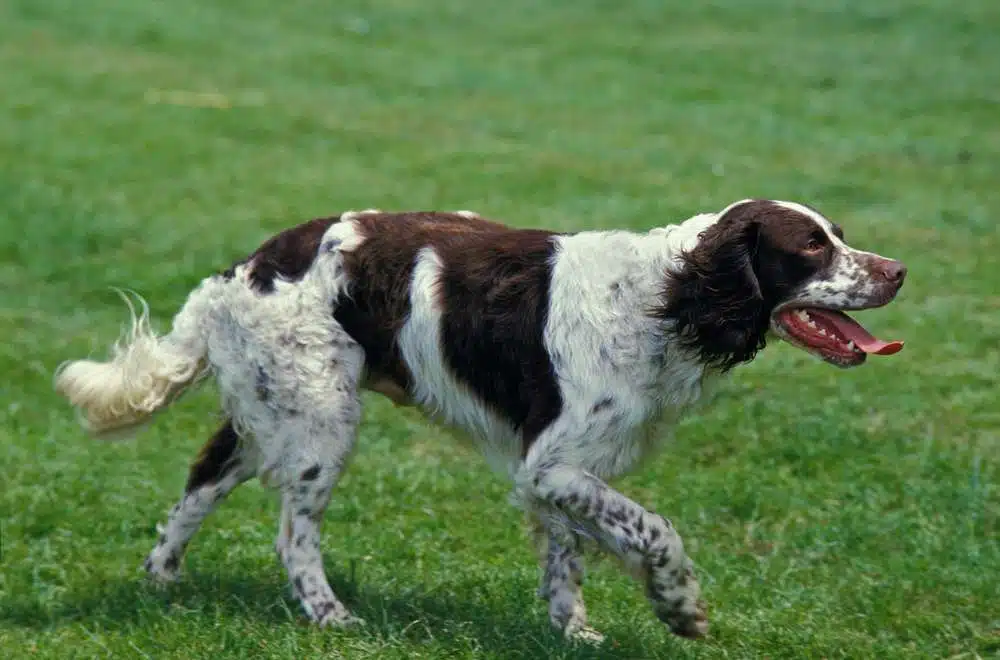
French Spaniel
With roots tracing back to the courts of Europe, the French Spaniel is a versatile and capable hunting dog with a notably gentle and friendly temperament. Bred to work closely with people, this loyal breed forms strong bonds with its owners and is especially affectionate with children. It also tends to get along well with other pets, making it a natural fit for family life.
Calm and non-aggressive by nature, the French Spaniel is not well suited to rough handling or overly dominant dogs. While even-tempered, it is still an active breed that requires at least one hour of vigorous daily exercise. Without sufficient physical and mental stimulation, boredom can set in, sometimes leading to behaviors such as digging or excessive barking.
This breed thrives in homes with space to roam and owners who enjoy an active lifestyle. French Spaniels are well suited to individuals, couples, or families with children of all ages, but they are generally not ideal for apartment living. They excel in wide-open environments where they can move freely and stay engaged.
The French Spaniel’s semi-waterproof coat ranges from light cinnamon to dark liver, often paired with white markings. It tolerates cold and damp conditions well and requires only occasional grooming, with relatively light shedding. Generally a healthy breed, the French Spaniel has an average life expectancy of 11–13 years and can be a wonderful, low-maintenance companion when handled with care and consistency.
French Spaniel Breed Traits, Temperament, And Care Guide

Are you thinking of adding a French Spaniel but unsure about the French Spaniel’s energy, grooming, or health needs? Many owners worry about training, daily walks, and whether the breed suits apartment life.
This guide answers those common concerns.
One key fact is the French Spaniel is a medium sized hunting dog recognized by the American Kennel Club and listed in the Foundation Stock Service. This post covers temperament, the breed standard, crate training, grooming, dog sports, and common health issues like hip dysplasia and ear infections. For apartment dogs, it’s especially important to focus on training strategies and behavior management, including crate training and setting clear boundaries, to help manage the French Spaniel’s needs in limited space.
Key Takeaways

- French Spaniels stand 21.5–24 inches (males), 21–23 inches (females), weigh 50–60 pounds, and live about 10–12 years.
- AKC added the breed to its Foundation Stock Service in May 2012, and the first breed standard appeared in 1891.
- Owners must provide at least one hour of high-energy exercise daily and weekly grooming to prevent boredom and ear or skin problems.
- Watch for hip dysplasia, otitis externa, ectropion, entropion, acral mutilation syndrome, and seizures, and use genetic testing plus regular veterinary screening.
- They adapt well to family life, respond strongly to positive reinforcement, and about 80% show natural retrieving instincts for hunting work.

History and Origin

Medieval Origins in France
French Spaniels trace their roots to 14th-century France, where they were developed as versatile hunting dogs. Highly valued by hunters and royal courts during the Middle Ages, they were used in falconry and as settling dogs for net hunting. Their skill as reliable gun dogs made them a favored breed among nobility.
Breed Standard and Early Decline
The first formal breed standard was written in 1891 by James de Connick. Despite their long history, French Spaniels faced near extinction by the early 20th century as hunting practices changed and other breeds gained popularity.
Revival and International Expansion
Beginning in 1906, Father Fournier led efforts to revive the breed, preserving its type and working ability. Thanks to these efforts, the French Spaniel survived and later expanded beyond France. Breeders introduced Epagneul Français to Canada in the mid-1970s and to the United States around 1997.
Modern Recognition and Breed Clubs
The French Spaniel is recognized by the Canadian Kennel Club (since 1985), the Fédération Cynologique Internationale, and the United Kennel Club. In the U.S., the breed entered the AKC Foundation Stock Service in May 2012. The Club de l’Epagneul Français, founded in 1921, remains the largest French Spaniel dog registry organization with roughly 600 members, while global numbers are estimated around 10,000 dogs, primarily in France and Quebec.
Physical Characteristics

Strong, balanced build and medium-length fur make this dog work-ready.
The French Spaniel is a strong, athletic dog with a balanced, muscular build and a smooth, medium-length coat most often seen in white and brown or solid brown. The French Spaniel’s striking appearance is highlighted by its flowing, feathered coat, typically a combination of white with liver or black markings. Long, flowing ears and gentle eyes give it a calm, classic look, while its powerful, ground-covering gait reflects serious hunting ability and stamina.
Built to work hard and move efficiently, this breed thrives with regular exercise and purposeful activity, pairing steady drive in the field with a composed, loyal nature at home.
Body and Structure
Males stand 21.5 to 24 inches tall and weigh 50 to 60 pounds. Females measure 21 to 23 inches tall. The French Spaniel has an elegant, muscular, balanced construction and a big-boned, setter-like appearance.
It ranks as the largest of the spaniel breeds, and its body is longer than it is tall. Breed club standard was first set in 1891 and has had several revisions since.
The tail is not docked and the coat lies flat, with a slight wave and longer hair on ears, legs, and tail. Conformation checks focus on balance, muscle tone, and gait. Hunters employ the breed as a pointing dog and as a skilled retriever, used in net hunting and on grouse, woodcock, pheasant, snipe, partridge, rabbit, hare, and waterfowl.
Movement shows a medium gallop with a semi-trot field technique. Same breed owners praise the French Spaniel as one of the largest spaniel breeds and a capable, medium sized dog for active family life.
Face and Expression

The French Spaniel’s face shows a calm, intelligent, and affectionate look. The French Spaniel’s balanced, frank, and gentle demeanor forms deep bonds with family. Their sociable, docile nature shows in a relaxed, approachable expression.
Eyes and face structure give a look like an English Setter and tie them to typical spaniel types.
The head may feature a white blaze, which is a desirable and characteristic feature of the French Spaniel’s appearance, often preferred by breeders, but all-brown heads are accepted within the breed standard. That face reflects an easygoing, eager to please character and a strong bond with people. Owners find the breed an ideal companion around other dogs and other pets.
This expression helps in training, and they often respond well to positive reinforcement in obedience trials and problem solving tasks.
Coat and Color

Coat colors run mainly white and brown, with brown shades from light cinnamon to dark liver. The French Spaniel’s coat often features markings such as roan RN, spotted SPTD or patched PTCHD, and moderate ticking. The breed standard accepts both flecked and roan patterns. A white blaze on the head is a preferred marking for the French Spaniel’s breed standard, though all-brown heads also meet the standard.
Patterns resemble those seen in brittany spaniel and English springer spaniels.
The coat lies long and flat and may wave slightly. Hair grows longer on the ears, legs, and tail. Dense, water-resistant fur suits active outdoor work and hunting, like water spaniel and pointer work.
Owners should brush once or twice a week with a bristle brush and use a wide-tooth comb for tangles, plus mild dog shampoo when needed. Coat maintenance stays necessary because of the length and density.
Movement and Gait

French Spaniel gait uses a semi-trot and a medium gallop that keeps the dog close to the hunter and lets it adapt pace and pattern to find game. The setter-like gait, similar to English setters, shows the breed’s robust, athletic build and fits both hunting and active family life.
Hunters call the dog an enthusiastic hunter, and the French spaniel is one of the high energy breeds that stays calm and composed at home.
Medium gallop lets the dog cover ground efficiently during hunts. Field work blends pointing and retrieving across varied terrain and shows the breed’s dynamic field style. Trainers use an exercise machine and a tracking device to build stamina and pace, and this adaptability makes them easy to train for agility and rally.
Temperament and Behavior

Known for its intelligence and gentle manners, the French Spaniel is calm, attentive, and eager to please. The breed adapts well to different home environments and is naturally affectionate with its family, showing a balanced temperament that combines sensitivity with confidence. Vocalizing is generally minimal, with barking typically limited to appropriate situations.
French Spaniels are widely regarded as excellent family dogs and are especially well suited to households with children. Their patient, even-tempered nature makes them reliable companions for young family members, and they tend to interact thoughtfully rather than impulsively.
Deeply social and people-oriented, French Spaniels form strong bonds with their owners and thrive on regular companionship. Their docile disposition allows them to integrate smoothly into multi-dog households, where they usually get along well with other dogs and enjoy cooperative play and shared activities.
French Spaniels are known to be easy to train due to their intelligence and eagerness to please. Positive reinforcement training methods are especially effective for French Spaniels due to their sensitivity and eagerness to please. Training stays simple because they respond fast and are highly trainable. Incorporating play sessions, such as fetch or hide and seek, into training and bonding can enhance a French Spaniel’s behavior, showcase their intelligence, and strengthen the owner-pet relationship. Early socialization at puppy stages shapes good manners around other animals and kids.
French Spaniels are friendly and can get along well with other pets in the house or at the park due to their calm and gentle nature. Owners should watch dog’s age and changing energy for training and physical exertion. Breeds register records and rescue organizations list them as great pets for active homes. Give fresh water, steady care, and moderate walks in cold weather or hot weather.
Health Considerations

Expect a life expectancy of 10-12 years. French Spaniels are generally healthy but can be prone to hip dysplasia, epilepsy, and certain eye problems. Watch for common health conditions like ectropion, entropion, and acral mutilation and analgesia, a condition that may cause self-mutilation. Genetic conditions can cause skin irritation, joint pain, and seizures or epilepsy in some lines.
Owners should use genetic testing and regular veterinarian checkups to spot problems early. Health screening and nutrition recommendations should be tailored to the dog’s age, as puppies and adults have different needs.
Specialized dog food is needed for unique digestive needs. Keep a grooming schedule with weekly brushing, as the French Spaniel’s coat may pick up dirt and debris when out and about, which is normal and can be managed with occasional baths. Their ears should be checked regularly for debris and pests to prevent infections. Nail trimming is important and should be done once or twice a month. This upkeep is essential for coat health and skin comfort.
Practice dental hygiene with regular teeth brushing to limit tartar. Breed lore mentions a French priest and a French spaniel named babe in old stories.
Common Concerns
French Spaniels face a few health risks that owners should watch for. Early screening and regular veterinarian check-ups catch many problems early.
- Long, pendulous ears raise the risk of otitis externa and ear infections. Clean and dry ears weekly with sterile ear wipes, have a veterinarian check ears with an otoscope, and treat infections quickly to avoid chronic issues.
- Owners should watch for ectropion and entropion, which can cause irritation and dark amber discharge. Have a veterinarian assess eyelid fit early; surgery or medical therapy often resolves persistent problems and protects vision.
- Acral mutilation syndrome may show as severe paw licking, biting, or tissue loss and can be genetic. Discuss risks with a responsible breeder, run a canine DNA panel, and seek early veterinary care for wounds or behavior change.
- Hip dysplasia can affect joint health in this dog breed and in some purebred dogs. Use hip radiographs and Orthopedic Foundation for Animals screening, manage weight with a scale, and keep targeted exercise to lower joint strain.
- Seizures and epilepsy appear in some French Spaniels and require urgent care. Keep a seizure log, get prompt veterinary diagnosis, and work with a neurologist for medication, monitoring, and emergency planning.
- Grooming and coat care reduce ear and skin problems in this popular dog. Brush feathering, dry the coat after swims, trim excess hair near ears, and book regular grooming to keep ears clear and skin healthy.
- Choose a responsible breeder before buying a puppy to aid decision making and cut inherited disease risk. Ask for health clearances, hip scores, and comparisons with other breeds and English breeds like Blue Picardy, Irish Water Spaniel, King Charles Spaniel, and Papillons.
Lifespan
Lifespan usually runs 10 to 12 years for this breed. Field Spaniels average 12 to 13 years, Boykin Spaniels 10 to 15 years, Brittanies 12 to 14 years, and Drentsche Patrijshonds 11 to 14 years.
Routine veterinary care and periodic health screenings help extend life and catch problems early. Good genetics and responsible breeders shape longevity. Daily exercise and a balanced diet support weight and strong joints.
A cobby, sturdy build adds hardiness in active homes. Some clubs place the dog in a miscellaneous class before full recognition, and fans often note links to french royalty in breed stories.
Training Considerations

French Spaniels are easy to train, and they show high intelligence. They respond best to gentle handling and patience. Use positive reinforcement techniques and operant conditioning in short sessions.
Owners can use a marker device, a reward pouch, a flat collar, and a long line for drills. About 80% of dogs show strong natural retrieving skills, while some need extra retrieving work.
Strong hunting and pointing instincts make them suitable for first-time bird dog owners. They show eagerness to please.
Start socialization early to shape calm, well rounded behavior. Use puppy classes, neighborhood walks, and safe play with other dogs. Consistent, regular training sessions are essential to prevent boredom.
Dog sports such as agility, obedience, and rally provide both mental and physical stimulation. Short daily drills, clear cues, and steady rewards help keep drive high. Owners who set clear goals and use gentle cues often enjoy a willing, steady hunting partner.
Exercise and Socialization

This breed needs daily activity. Provide at least one hour of high-energy exercise each day.
- Use a fenced yard for daily high-energy play, like retrieving with a fetch toy or ball launcher. Aim for at least 60 minutes of active running, chasing, and recall work to meet the breed’s needs, and use a flotation vest for water retrieves.
- Plan structured walks and off-leash hikes for endurance and scent work. Use a leash or long line and a fitness tracker to monitor distance, and include short sprint intervals plus steady trotting.
- Include indoor games like hide-and-seek, ball games, and tug to boost mental skill and burn energy. Rotate puzzle toys and short obedience drills using a clicker and treats to keep focus.
- Try agility course sessions and obedience class twice weekly for mental strain and rewarding tasks. Use a treat bag and clear cues to speed learning and build reliable responses.
- Adapt routines for apartment life with short hallway walks, stair sprints, and indoor fetch to reach the hour target. Rotate toys daily and add brief training sets to prevent boredom.
- Schedule regular playdates at dog parks or group walks since the breed is sociable and benefits from canine interaction. Supervise first meetings and steer play toward controlled retrieving and structured chasing.
- Give a job like retrieving drills or scent games to keep your spaniel mentally fit and avoid destructive behavior. Change tasks weekly and include short training sessions to sustain interest.
- Watch for signs of boredom, such as chewing, pacing, or vocalizing, and increase exercise if you see unwanted behaviors. Aim to meet the one hour guideline to prevent problems.
Living with a French Spaniel

French Spaniels show an affectionate, gentle temperament that suits family life. They trace to France in the 14th century, where hunters developed them as hunting dogs. Owners must give daily exercise and mental stimulation through walks and dog sports.
Plan on weekly grooming with a grooming brush to manage moderate shedding and protect coat health. Use a leash, a clicker, crate training and short obedience sessions to harness their strong eagerness to please.
Supervise play with young children, and keep regular veterinarian visits for routine care.
Best Environment
They thrive in rural and suburban homes with room to roam. Owners must give at least 1 hour of high-energy exercise daily, like fetching, hiking, or long outdoor adventures. Families must provide care, shelter, and companionship.
Proper socialization, consistent training, and mental stimulation keep behavior stable. Use a leash, harness, and a tracker device on outings and visit a public play area for meetups.
Active families or outdoor people fit this breed best. Enroll in an obedience class and use a training tool to build focus and manners. Feed a balanced diet matched to age and activity level for long term health.
They can adapt to apartment life with strict exercise and companionship routines.
Behavior towards Children
French Spaniels rate as good with young children in many assessments. Owners report an affectionate, gentle nature that forms strong family bonds. Always supervise rough play and teach kids calm handling.
In studies, dogs followed children’s pointing gestures 74% of the time, showing high response to social cues.
Children’s attachment links to how dogs behave and to perceived social support. Research shows dogs that solicited less petting were rated as having stronger bonds by children. A child’s bond with parents had only a marginal association with their bond to the dog.
Assigning care tasks did not increase children’s reported feelings of attachment. Understanding child dog interactions helps foster positive relationships. Teach kids to read social cues and use a training device or short lead for safe interactions.
Behavior towards other Pets
Most French Spaniels tend to be sociable with other dogs and often accept other household animals under supervision. Supervision matters during early meetings, especially with small animals.
Behavioral studies show variation in sociability across individuals, so some spaniels need gradual, controlled introductions. Early socialization and consistent training, using leash work, crate practice, and clicker sessions, improve compatibility.
Hunting instincts can raise prey drive, so owners should add extra training before mixing spaniels with non-canine animals. A calm, balanced temperament helps smooth introductions, and monitor first interactions to keep a harmonious household.
Grooming Needs

Brush the long, flat coat at least once weekly to keep hair healthy and cut shedding. The coat grooming frequency score is 1, which means infrequent care, but weekly work is optimal.
Routine grooming helps manage moderate shedding and prevents matting. Use a brush, a fine-toothed comb, and an undercoat rake for coat care and tangles.
Bathe only when needed with a mild dog shampoo to keep the coat clean and odor free. Trim nails with dog nail clippers to prevent overgrowth, splitting, and cracking. Check ears often for wax buildup and signs of infection, since long ears trap debris; use a gentle ear cleaner on cotton pads.
Brush teeth with a dog toothbrush and enzymatic paste on most days to protect oral health and avoid dental issues.
Nutrition and Feeding

Feed French Spaniels formulas that match their life stage, from puppy to senior. Nutrition and health screening recommendations should be tailored to the dog’s age, such as puppy or adult, to ensure appropriate care. Manufacturers offer breed-specific formulas for medium-size dogs. Consult a veterinarian or a trusted breeder about puppy meal frequency and adult diet.
Use a measuring scoop or a kitchen scale to track portions. Check AAFCO statements on labels to confirm nutrient balance. Match choices to the breed’s digestive needs.
Keep fresh, clean water available at all times in a sturdy bowl. Feed full-grown French Spaniels a balanced adult dog food at least twice daily. Offer nutrient-rich meals to fuel their active lifestyle and support strong muscles.
Adjust feeding amounts based on age, size, and activity level. Proper nutrition supports health and helps prevent obesity. Consider an automatic feeder for timed meals and a heavy dish to avoid spills.
Where to find a French Spaniel

Use the AKC puppy marketplace to find French Spaniel puppies. Contact the U.S. French Spaniel group for breeder referrals and breed information.
Look to registries that list the breed, like the Fédération Cynologique Internationale, the Canadian Kennel Club, NAVHDA, and the United Kennel Club. The breed reached Canada in the mid-1970s and arrived in the United States around 1997.
The French Spaniel Club of Canada formed in Quebec in 1975, and the CKC granted recognition in 1985. The American Kennel Club permitted the breed in Pointing Hunting Test Events on October 1, 2012.
If you prefer adoption, check the AKC Rescue Network, which includes over 450 breed specific rescue groups. French hunters still prize this pointing breed, and interest now grows worldwide.
Similar Dog Breeds

These breeds share hunting roots and spaniel traits. Compare AKC recognition dates, lifespans, and behavior to pick the right dog.
| Breed (AKC Status) | Similarities | Differences | Best Fit for Owners Who… |
|---|---|---|---|
| Field Spaniel (AKC recognized, 1884) | Medium-sized sporting dog, affectionate temperament, strong hunting instincts, adaptable to family life | Lower energy than many spaniels, rarer breed with smaller gene pool, requires close attention to joint and ear health | Want a calmer sporting dog and are diligent about pedigree verification through the American Kennel Club, routine vet care, and preventative health screening. |
| Boykin Spaniel (AKC recognized, 2009) | Athletic build, eager retriever, people-oriented, excels in active households | Stronger preference for water work, higher overall energy, more common in the U.S. Southeast | Lead active lifestyles with frequent outdoor or water activities and plan to complete hip and eye testing through the Orthopedic Foundation for Animals. |
| Brittany (AKC recognized, 1934) | Highly trainable, sporting heritage, thrives with engagement and purpose | Higher drive and speed, more intense exercise needs, less suited to sedentary homes | Can commit to structured daily exercise, advanced training, and mental stimulation to channel energy productively. |
| Drentsche Patrijshond (Not AKC recognized) | Versatile hunting dog, loyal and family-oriented, intelligent and responsive | Very rare outside Europe, typically sourced through breed clubs, limited breeder availability | Appreciate rare working breeds, are willing to work with a national breed club for pedigree records, and prioritize consistent training and socialization. |
French Spaniel stands largest among spaniel breeds and shows a robust build. Compare its size, temperament, AKC stats, and regional popularity to other spaniels, and choose the breed whose activity needs match your home and schedule.
Conclusion

You learned the French Spaniel’s history, build, coat, temperament, health needs, and daily care. Practical steps like weekly grooming with a grooming tool, balanced dog food, daily walks, and basic training tools fit most routines.
Applying these tips lowers health risks, boosts good behavior, and extends the dog’s lifespan. Contact the AKC or the French Spaniel Club and schedule a visit with a veterinarian for breeder referrals and care plans.
Embrace the effort now, and your French Spaniel will repay you with loyalty, playfulness, and steady companionship.
FAQs
1. What are the key breed traits of the French Spaniel?
The French Spaniel is a medium-size dog breed with a strong nose and steady gait. Key breed traits include a dense, medium-length coat, calm house manners, reliable hunting or field skills, and steady energy that needs daily activity. Expect a lifespan near 12 to 14 years.
2. What is the typical temperament of the French Spaniel?
The temperament is friendly, loyal, and even. This dog bonds with family and tolerates children. It shows focus in the field and a calm side at home. Early socialization lowers the chance of fear or shyness.
3. How do I follow a care guide for a French Spaniel?
Give about 60 minutes of exercise daily with walks, play, and scent games. Brush fur weekly and check ears and teeth. Feed a quality diet matched to activity. Keep regular vet checks and shots. Start training and socialization when the young dog arrives.
4. Are French Spaniels hard to train or high maintenance?
That myth is false. The breed traits show they learn fast with clear, reward-based training. They can follow their nose, so train recall and use off-leash only in safe places. For separation issues, build short alone times and steady routines. Most owners find them moderate in maintenance.
References
- https://wagwalking.com/breed/french-spaniel-1 (2024-07-16)
- https://www.akc.org/dog-breeds/french-spaniel/
- https://projectupland.com/dogs/french-spaniel-dog-breed/
- https://pmc.ncbi.nlm.nih.gov/articles/PMC5214578/
- https://onlinelibrary.wiley.com/doi/10.1111/brv.13128
- https://pmc.ncbi.nlm.nih.gov/articles/PMC11718627/
- Furlyfe Rank See Rank
- Group AKC Foundation Stock
- Origin France
- Size Medium
- Weight 44 to 55 pounds
- Coat Length Medium
- Coat Type Smooth
- Colors Liver & White
- Other Names Epagneul Francais, French Setter, Canadian Setter
- Temperament Adaptable, Calm, Energetic, Intelligent, Loving, Tough