
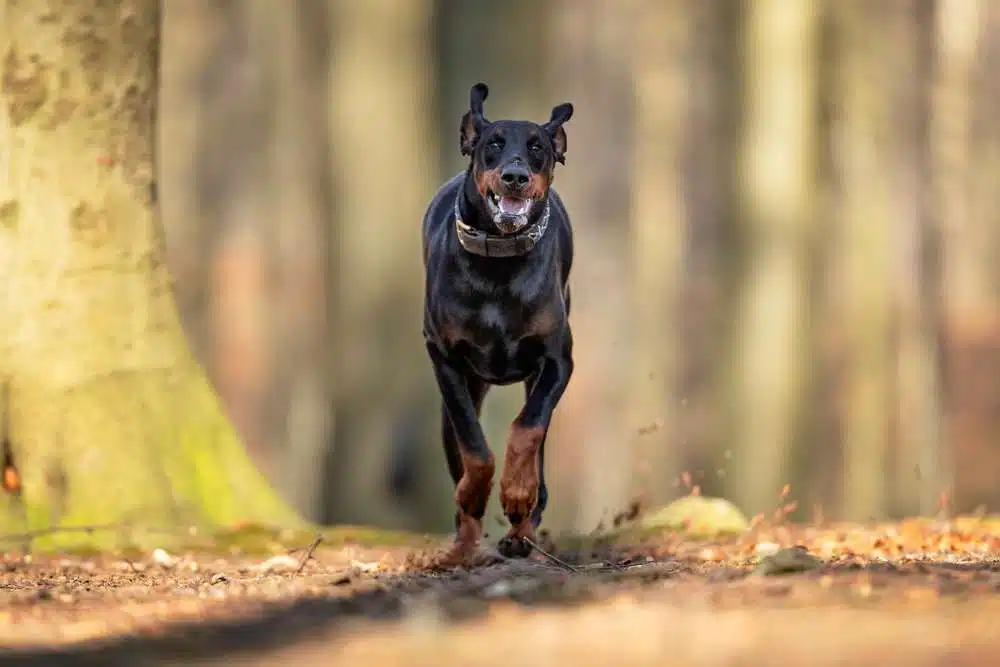
Doberman Pinscher
Despite their reputation as strong and intimidating dogs, Doberman Pinschers are deeply loyal to their families and typically affectionate companions. Unless they sense a genuine threat, Dobermans tend to be friendly and loving with those around them. This strong bond between dog and owner is a major reason the breed has remained popular for more than a century.
Unfortunately, the Doberman’s popularity has also led to careless and irresponsible breeding in some cases. Poor breeding practices have contributed to health and temperament problems in certain lines. Because Dobermans may be sold through pet stores, large kennels, or online sellers, prospective owners should carefully research breeders to ensure they find a healthy, well-raised dog.
For owners willing to invest time and consistency, the Doberman can be an exceptional companion. These dogs are among the most intelligent of all breeds and respond extremely well to fair, structured training. Their intelligence also means they quickly learn habits—good or bad—so attentive guidance is essential.
Dobermans also require substantial physical exercise and mental stimulation. Leaving them alone in the backyard all day with little interaction can quickly lead to boredom and frustration. Providing regular activity, training, and engagement helps prevent destructive behavior and keeps the dog mentally balanced.
Originally developed as a guard dog, the Doberman has a natural instinct to protect family members and remain alert to potential danger. This protective ability is one of the breed’s greatest strengths, but proper socialization is essential. Without it, a Doberman may become overly suspicious of unfamiliar people or situations.
Because they are working dogs that crave companionship, Dobermans should live inside the home with their family rather than being isolated outdoors or in kennels. Living closely with their people helps prevent loneliness and allows their loyal nature to fully shine.
Care requirements are relatively straightforward. Routine nail care, maintaining a healthy weight, regular exercise, and weekly brushing are usually sufficient to keep them looking their best. Dobermans can be vocal watchdogs, so early training to manage barking is also helpful.
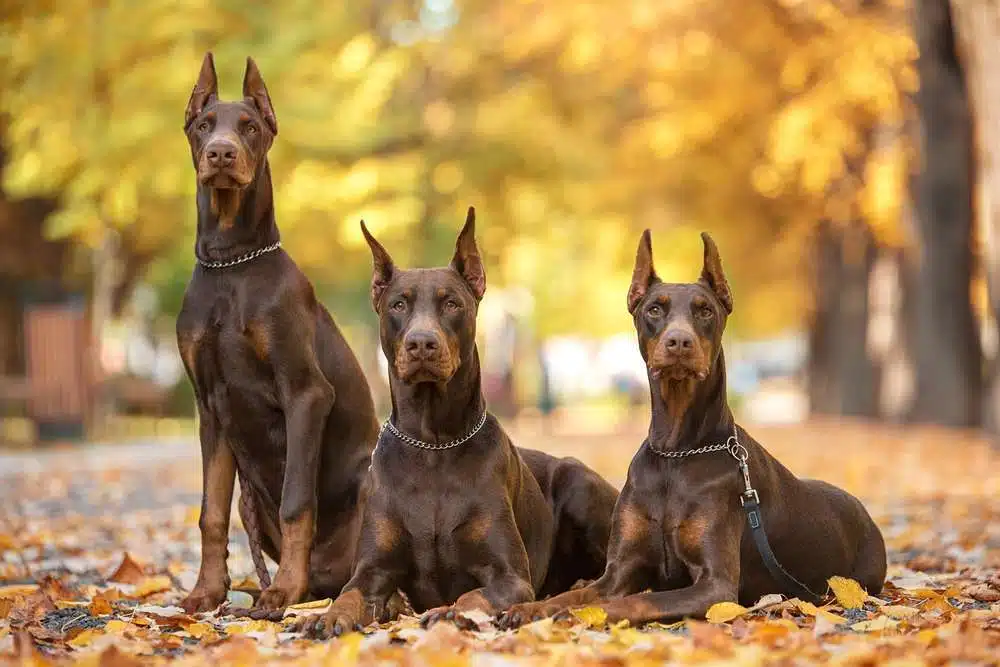
Although the classic Doberman appearance features a black coat with rust markings, the breed actually comes in several colors. In addition to black and rust, Dobermans may appear in red, blue (a gray tone), or Isabella, a pale fawn color with rust accents.
Doberman Pinscher Dog Breed Guide: Traits, Temperament, And Care Tips

Introduction: Are you thinking about a Doberman Pinscher or do you already own one and feel unsure about care and training? Many owners worry about high energy, strong guarding instincts, and health risks.
You might ask how much exercise to give, what health tests to run, and how to start obedience training.
The Doberman Pinscher is part of the American Kennel Club Working Group. This guide explains temperament and care, flags common issues like hip dysplasia and dilated cardiomyopathy, shows recommended tests, such as hip evaluation, cardiac exam, and thyroid evaluation, and gives clear steps for puppy training classes and obedience training. It also covers exercise, canine sports, nutrition, and grooming with a grooming mitt.
It points to responsible breeders, the Doberman Pinscher Club, and Doberman rescue groups. Keep reading.
Key Takeaways

- Doberman history: Karl Friedrich Louis Dobermann bred them in 19th-century Apolda; AKC recognized the breed in 1908 and the DPCA formed in 1921.
- Expect lifespan 10–12 years; DCM drives many deaths with about 25% sudden death and cardiac deaths near 15% in UK surveys.
- Owners and breeders must run annual heart ultrasounds, von Willebrand, hip (OFA/PennHIP), and thyroid tests to reduce DCM, vWD, and hip dysplasia risk.
- Give at least one hour of daily exercise, early socialization, and short positive-reinforcement training sessions to prevent boredom, destructive behavior, and guarding issues.

History and Origin

The Doberman Pinscher is a large dog breed that was first bred in Germany in the late 19th century by Karl Friedrich Louis Dobermann (also spelled Louis Doberman), a tax collector and dog breeder from Apolda, Germany, who created the breed specifically for protection.
Karl Friedrich Louis Dobermann bred this dog for protection.
Origins in 19th-Century Germany
The Doberman Pinscher was developed in the late 19th century in Apolda, Thuringia, Germany, by Karl Friedrich Louis Dobermann. A tax collector by trade, Dobermann wanted a loyal, formidable dog to protect him during his rounds. Early on, the breed was known as the “Tax Collector’s Dog,” reflecting its practical purpose as a personal guardian.
Foundation Bloodlines
Though exact records were not kept, historians believe Dobermann used breeds such as the Rottweiler, Black and Tan Terrier, German Pinscher, and possibly the Weimaraner to create a dog that combined strength, speed, intelligence, and loyalty. The result was a sleek, powerful working dog with sharp instincts and natural protective drive. The dogs were first publicly shown in 1863 and made their official show ring debut in 1897.
Formal Recognition and Breed Standard

After Karl Dobermann’s death in 1894, admirers named the breed the Dobermann-Pinscher in his honor. Otto Goeller founded the first breed club in 1899 and drafted the initial breed standard, helping refine type and temperament. In time, Germany and Britain dropped “Pinscher” from the name, while the United States retained it. The American Kennel Club officially recognized the breed in 1908, and the Doberman Pinscher Club of America was established in 1921 to guide responsible breeding and events.
Wartime Service and Legacy
World War II significantly elevated the breed’s profile. The U.S. Marine Corps adopted Dobermans as official war dogs, valuing their intelligence, courage, and reliability. Twenty-five Dobermans were killed in action during the Battle of Guam, and their sacrifice is honored at the National War Dog Cemetery.
Today, the Doberman Pinscher remains a symbol of alertness, loyalty, and disciplined strength. Still widely respected as a guard dog, the breed also excels in police work, protection sports, obedience, and other dog sports—continuing the purposeful legacy first envisioned by its creator.
Physical Characteristics

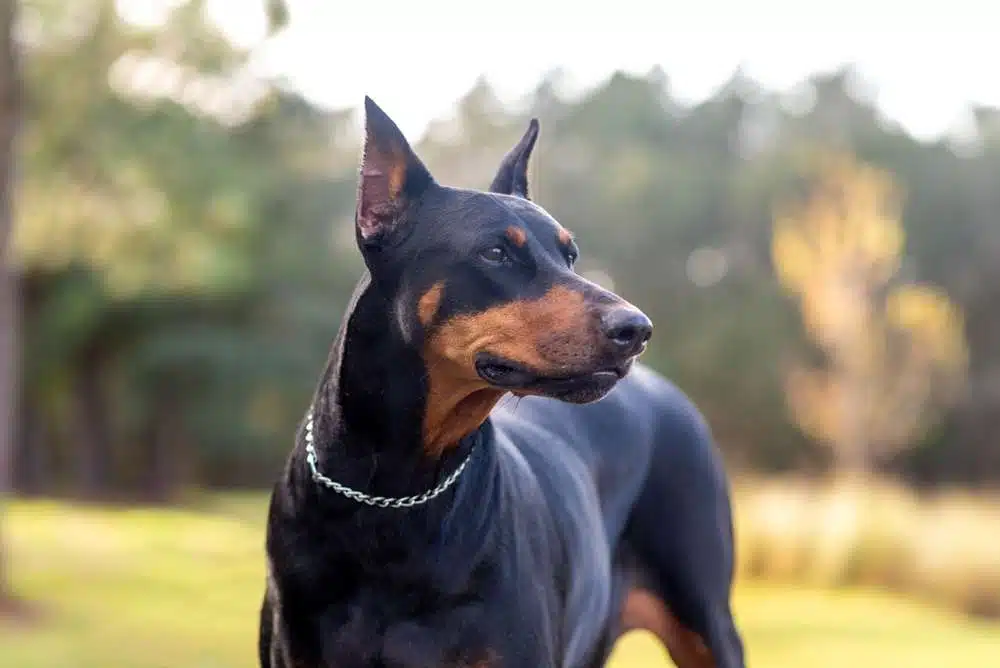
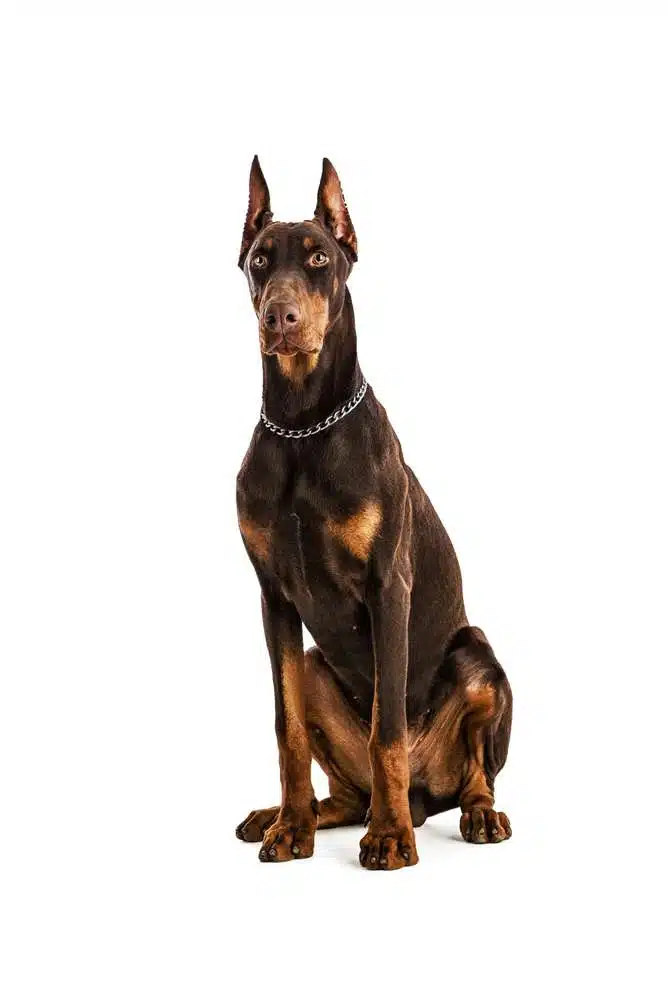
Dobermans show a sleek, powerful, and athletic build. Breeders describe the body as compact, muscular, and square, built for agility and speed. They have a long, wedge-shaped head with a dolichocephalic skull and almond-shaped eyes.
Among dog breeds, the Doberman traces to German lines and the German Pinscher. Brown rust markings often accent the face and give a watchful look. Natural tails are long, though tail docking happens near the second vertebra in shows where legal.
Ear cropping occurs in some countries, a practice that remains controversial and illegal in many places. Clean cropped ears every few days with baby oil on a paper towel to prevent issues.
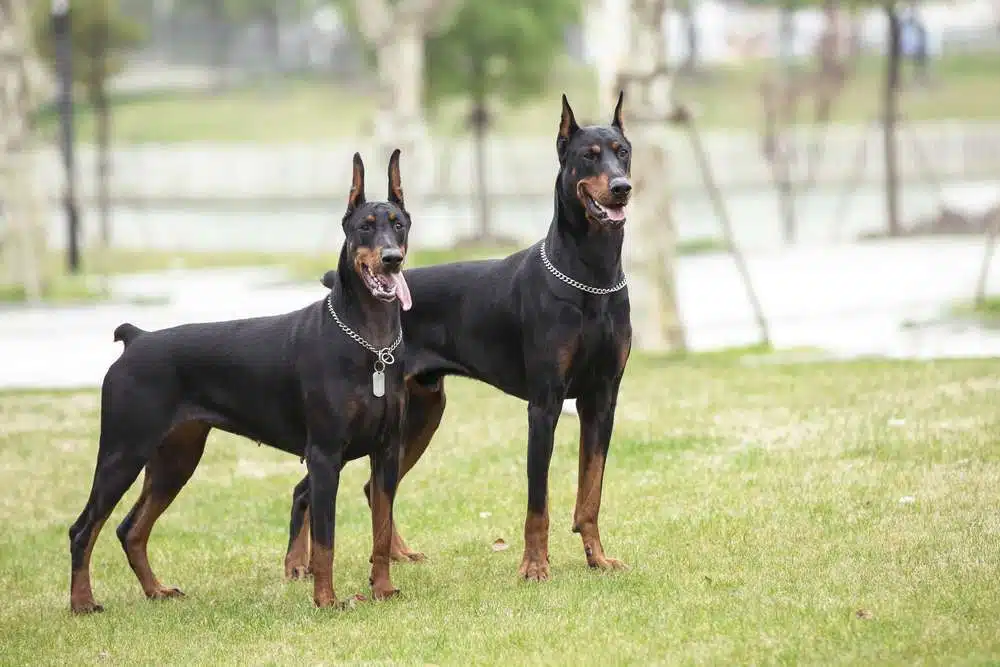
The short, smooth single-layer coat sheds at a moderate to heavy rate and needs weekly brushing. AKC breed standard recognizes black and rust, blue and rust, red and rust, and fawn Isabella and rust.
White Dobermans carry an SLC45A2 gene deletion, and the kennel club does not accept them due to linked health risks. Blue and fawn dogs can show color dilution alopecia, a condition that affects the coat but is not life threatening.
Bathe every six to eight weeks to keep the coat shiny and healthy. Movement should look elastic, free, balanced, and vigorous with good reach in the forequarters and driving power in the hindquarters.
That ground covering stride proves their suitability as a working dog and a loyal companion.
Body and Structure

This breed stands 24 to 28 inches at the shoulder, a key marker for doberman pinscher size. Adult males weigh 75 to 100 pounds, while females range 60 to 90 pounds. They have a square body and a long, wedge-shaped head with a well-defined muscular build.
The skull is classified as Dolichocephalic, giving a long, narrow muzzle that fits the breed’s sleek profile in conformation. Coat colors include Black & Rust, Blue & Rust, and Fawn & Rust on a short, smooth coat.
Many owners dock tails to approximately the second joint, and trainers use a measuring tape and scale to track growth in these large dogs.
Face and Expression

Long, wedge-shaped head and almond-shaped eyes give the Doberman a look of vigor and energy. A strong, confident expression reflects the Doberman pinscher personality of intelligence and loyalty.
Distinctive brown markings add to the breed’s unique appearance. Ears cropped or natural, the gaze still reads clear intent.
Their expression varies with mood, from playful to alert to serious. Many people misunderstand them because an imposing presence makes some view them as only guard dogs. Early socialization helps dobermans generally show their friendly side, and makes them good family pets and loyal companions.
Talk with the dog’s breeder or local breed clubs if you adopt from rescue dogs or a dog pound, or use a camera to study subtle expressions.
Coat and Color

Doberman Pinschers have a smooth, short coat. They come in four main color combos, Black and Rust, Red and Rust, Blue and Rust, and Fawn or Isabella with rust markings. Two color genes control those patterns and can produce conditions like color dilution alopecia.
The first white Doberman, a noted point in doberman pinscher history, was born in 1976 from a genetic mutation that causes photosensitivity, which can harm skin and eye health. Breeders who study German pinschers note similar color genes across German breeds.
Owners need only monthly grooming to keep the coat healthy. The coat scores a moderate 4 on the shedding level scale. Cold weather affects them because the short coat offers little insulation.
Pet parents should use a protective coat at low temperatures. Tail docking and ear cropping were common in the past, but many countries, including the European Union and Australia, now ban those practices.
Brushes and a soft glove make grooming fast and help keep a healthy doberman comfortable.
Movement and Gait

They have a powerful, elegant gait that reflects athleticism and working dog heritage. A strong stride lets them cover ground with ease. Owners must give at least one hour of daily exercise to keep muscles and movement healthy.
This need places them among energetic dogs and intelligent dog breeds that crave activity.
Proper training from a young age builds coordination and encourages correct gait. Puppies must avoid excessive strenuous activity until growth plates close to prevent joint issues.
Schedule regular veterinary check ups and orthopedic exams to monitor hips and mobility for genetic problems like hip dysplasia, canine dilated cardiomyopathy, and von willebrand’s disease.
Track signs of neck pain, limping, or stiffness early and act fast, and their movement can make them a good family dog for active owners who commit to training and care.
Temperament and Behavior

Dobermans show an alert, loyal, and fearless temperament. The breed scores 5/5 for affection with family and 5/5 for watchdog and protective instincts. Experts rate playfulness 4/5, barking 2/5, drooling 2/5, and openness to strangers 1/5.
Owners find Doberman Pinschers rank among the most intelligent dog breeds and learn cues very quickly. Female Dobermans often bond closely with family, while males tend to show more territorial behavior.
Early training and socialization prevent pushy or destructive behavior and help them accept unfamiliar dogs and strange dogs. Family surveys rate Dobermans 4/5 with children and 2/5 with other dogs, so owners must supervise play with other breeds and check each individual dog.
High energy levels score 3/5 and mental stimulation needs score 4/5, so this well mannered companion thrives with daily running, leash walks, crate rest, and training games. Owners should also watch health risks like von Willebrand disease and gastric dilatation volvulus when planning activity and feeding.
Health Considerations

Genetic issues shape Doberman health. Hip dysplasia and progressive retinal atrophy appear often. Studies put von Willebrand disease at 3 to 8 percent prevalence; this is a genetic blood disorder that is more common in Doberman Pinschers than in some other breeds. Dilated cardiomyopathy drives many deaths; one English study found Dobermans comprised 16 percent of DCM cases. Gastric dilatation-volvulus (GDV) is another severe condition that can affect Doberman Pinschers and requires immediate veterinary intervention.
A UK health survey put cardiac deaths at 15 percent. About 25 percent of dogs with cardiomyopathy die suddenly. Females face higher sudden death risk, while males more often develop congestive heart failure.
Hypothyroidism affects 6.3 percent of Dobermans, compared to 1.54 percent in mixed breeds. Hypothyroidism can lead to symptoms such as weight gain and lethargy. Intervertebral disc disease appears in 12.7 percent of the breed, versus 4.43 percent in mixed dogs.
Blue and fawn coat genetics can cause color dilution alopecia, though rust colored markings stay unaffected. Veterinarians must test for von Willebrand disease before surgery because it affects blood clotting.
Regular vet checks, heart ultrasound, blood tests and radiographs cut risks when owners act early. Responsible breeders run genetic testing and screening, and use healthy, well-socialized breeding stock to ensure the production of quality puppies; buyers should avoid those who do not test.
Life expectancy averages 10 to 12 years, and Doberman Pinschers are generally considered a healthy breed, with a 2024 UK study at 11.2 years and a 2024 Italian report at 8 years. A 2005 Swedish study found 68 percent of dogs died by age 10, compared to 35 percent across all dogs.
Post diagnosis survival for DCM runs about 52 days in this breed, versus 240 days in other breeds. Some health patterns trace back to two breeds used in early crosses. Health varies in individual dogs and between breed lines, much like variation seen across many breeds in general.
A folk tale links the dog to a German tax collector, but that legend does not affect care. The breed stays generally healthy with attentive care and responsible breeding.
Common Concerns

Dobermans face several specific health and behavior risks. Owners need clear, practical steps to manage them.
- Ask breeders for heart clearances and schedule an annual heart ultrasound, starting as a puppy and then yearly; this detects dilated cardiomyopathy early and guides treatment choices.
- Request a Von Willebrand test from the breeder and your vet before surgery; this bleeding disorder can affect blood clotting and surgical risk.
- Insist on hip evaluations like OFA or PennHIP and keep your dog lean; hip dysplasia risk drops with controlled weight and measured exercise.
- Choose breeders who run genetic testing and share results; responsible breeders help reduce inherited disease in the same breed through clear records.
- Feed a high-quality diet and measure portions; use moderate treats only and track calories to prevent obesity and joint stress.
- Provide daily physical work and mental puzzles; Dobermans need firm activity and training sessions to avoid boredom and destructive behavior.
- Start socialization and basic training early with positive methods and puppy classes; this builds good manners around children and other dogs.
- Supervise introductions with other pets and kids and train boundary skills; territorial instincts can surface, so manage encounters calmly and consistently.
- Note the breed’s sleek, muscular build and four colors, black, red, blue, and fawn; coat care stays simple compared with several breeds, but regular checks matter.
Lifespan
Expect a Doberman Pinscher to live about 10 to 12 years. A 2024 UK study found an average life expectancy of 11.2 years for these dogs. Dilated cardiomyopathy, or DCM, shortens many lives and drives the high early mortality.
About 68% die by age 10, a rate higher than the average for all dogs.
Responsible breeding that screens for heart genes and other inherited problems can improve longevity and reduce genetic health issues. Veterinary checkups and cardiac screening, including echocardiogram and DNA screening, catch problems early.
Act on abnormal test results with treatment plans and follow up exams.
Training Considerations

Stanley Coren ranked Dobermans fifth for obedience command training. Breed trait scores rate trainability at five out of five. They are highly intelligent. They learn fast and do well in rally obedience, Schutzhund, and agility.
Studies since 1965 show a stable, genetically influenced temperament in this breed. Early socialization and obedience training must start in puppyhood. Puppy classes suit first time owners.
Owners should use operant conditioning with clear cues and an audible marker. Choose a flat collar, harness, and short leash for early lessons.
Consistency and positive reinforcement prevent aggressive or problematic protective behaviors. Set short sessions of five to ten minutes, two to four times daily. Use treats and food puzzles to give mental stimulation and slow feeding.
Add training drills from rally and Schutzhund to channel drive and focus. Provide crate time and puzzle feeders to avoid boredom and destructive chewing. Enroll in obedience classes early and keep social exposure wide.
American standards do not count aggression toward other dogs as viciousness. Plan training with a veterinarian or certified trainer for dogs that show early guarding behaviors.
Exercise and Socialization

Dobermans need at least one hour of exercise every day. Early socialization builds calm, confident adults.
- Plan at least 60 minutes of active work daily, mixing long walks, hikes, and runs. Use a secure leash for urban routes and a large fenced area for free running to meet physical and mental needs.
- Limit high-impact play for puppies until 12–18 months to protect growing joints. Use short walks, controlled play, and gentle games in young dog classes; avoid long runs and jumping until bones mature.
- Offer daily brain work with puzzle toys, scent walks, and short training games. Rotate challenges every few days, use a training marker, and keep sessions under 15 minutes to avoid boredom and destructive behaviors.
- Expose puppies to people, animals, and places during puppyhood in supervised settings. Keep socialization steady into adulthood and enroll in obedience classes and structured meetups to reduce wariness of strangers.
- Channel high drive into sports like agility and search and rescue, where Dobermans excel. Train with appropriate equipment and coaches, and schedule regular practice to lower boredom and cut destructive behaviors.
- Set a daily routine that blends one hour of activity, short training slots, and social outings. Keep sessions consistent and vary challenges so mental and physical needs stay met for life.
Living with a Doberman Pinscher

Keep a Doberman inside the home with the family, not outdoors alone. They dislike rain, cold, and snow. They will sit still if allowed. Owners need ample space for play and daily exercise.
A fenced yard works best. Do not let one roam free; use secure fencing and a leash. The breed matures at about 2 years. Some males act submissive to females. Other males show dominance over male housemates.
This dog suits experienced owners or people who commit to obedience class, kennel training, clicker use, and ongoing socialization. Negative public perception makes responsible ownership and steady training essential.
Work with a veterinarian for health checks and advice.
They bond closely with children. They score 4/5 for being good with young kids. Well socialized Dobermans stay loyal and family oriented. They show strong protective instincts toward children.
They remain patient with infants and toddlers when well socialized. Puppies show high energy. Puppies need supervision around infants and toddlers to prevent nipping. Older children can help with training and daily care.
Introduce other pets early and use slow, supervised meetings to reduce stress. Use caution with adult introductions because the breed can overwhelm smaller animals with rough play.
Male dogs often display more aggression than females. Mixed breed dogs show more fear and aggression from poor socialization. Education on dog behavior and consistent socialization reduces the risk of inter animal aggression.
Best Environment

Dobermans need at least one hour of exercise daily. Early socialization and ample training from puppyhood shape their behavior. Use positive reinforcement training methods to build a strong family bond.
They excel in obedience, agility, and search and rescue, and they thrive on mental enrichment activities.
Introduce varied stimuli early to boost social skills and reduce fear. Practice agility with course gear and clear cues from a training device. Provide a secure crate for house training and a local dog park for safe play, and see a veterinarian for routine checks.
This breed suits experienced owners who can invest time in training and care.
Behavior towards Children
A Doberman Pinscher scores 4 in behavior toward children, showing high patience and tolerance. They score 4 in playfulness and like short games with kids. Their protective nature scores 5, which gives children a clear sense of security.
Smart and easily trainable, they score 5 for intelligence and learn household rules fast. Early socialization shapes calm behavior around unfamiliar children.
Teach gentle manners with positive reinforcement and a training clicker in the early months. Sign up for basic obedience classes to guide protective instincts and to rehearse commands.
Give daily exercise, like brisk walks on a leash and 30 minutes of play, to curb restlessness. Use dog crate training to give a quiet place and supervise all child-dog interactions.
Socialize early with varied people and pets so they accept children as family members.
Behavior towards other Pets
Doberman Pinschers score a 2 for being good with other dogs, so owners must supervise dog-to-dog meetings. Early socialization in puppyhood builds calm habits around cats and small pets.
Their playfulness scores a 4, which helps friendly play when owners guide it. Daily exercise rates a 3, and brisk walks or play sessions cut off excess energy.
Some dogs show territorial behavior and protective instincts around unfamiliar animals. Use a trainer, puppy class, a lead, a kennel, and a training clicker to stage calm introductions.
Keep meetings short at first and watch body language for a stiff tail or fixed stare.
Grooming Needs

Use a grooming brush weekly to manage moderate to heavy shedding. Bathe your dog every six to eight weeks with a mild shampoo and dry with a towel. The monthly coat grooming frequency is rated at 1/5, so deep sessions stay rare.
Clean ears every few days, particularly with cropped ears, using baby oil on a paper towel. Trim nails on a routine schedule and use a nail tool to grind black nails safely. Brush teeth regularly with a dental brush to maintain dental health.
Put on a dog jacket in winter because the short, smooth coat stays vulnerable to cold.
Nutrition and Feeding

Feed Dobermans a digestible, complete, and balanced diet that meets high energy needs. Puppies should eat three to four meals a day until six months old, then move to two meals daily.
Large-breed puppies need controlled calories to slow growth and cut the risk of orthopedic disease and obesity. Include omega-3 fatty acids, DHA and EPA, to support joint health.
Select high-quality dry food or canned food using the nutritional panel and AAFCO statements. Measure servings with a cup or kitchen scale and follow pre-portioned meal plans to meet calorie and protein targets.
Feed two meals per day for adults to lower the risk of gastric dilatation-volvulus. Give treats in moderation and keep fresh water available at all times. High-quality formulas improve digestion and result in firmer, healthier stools.
Where to find a Doberman Pinscher

Find AKC registered Dobermans on the AKC Marketplace. The Marketplace lists only 100% AKC puppies from AKC registered litters. The AKC, founded in 1884, offers breed, health, and training resources.
Contact the Doberman Pinscher Club of America, the official AKC Parent Club since 1921, for breeder referrals. Call Kristine Brown at (513) 703-8269 or email [email protected] for direct help.
Visit www.dpca.org to download the breed standard PDF and other resources. Use the AKC Rescue Network to locate purebred Dobermans needing homes, and buy only from breeders who run health tests for genetic conditions.
AKC breed clubs and rescue networks support the Doberman community.
Similar Dog Breeds

Below are four breeds often compared with the Doberman.
| Breed | Similarities | Differences | Best fit for owners who |
|---|---|---|---|
| Rottweiler | Rottweiler shares ancestry with Dobermans, including Black and Tan Terrier and German Pinscher roots. | Rottweiler is heavier and bulkier with a different gait and coat density. Related breeds include Rottweiler, Boxer, Miniature Pinscher, Beauceron, Great Dane, and Manchester Terrier. | Owners seeking a powerful, steady guardian with slower sprint speed may choose this breed, but strong training and socialization are essential. |
| Boxer | Boxer matches the Doberman in a sleek, muscular build and common brown markings from shared working lines. | Boxer displays a more playful, clownish temperament and a shorter muzzle than many Dobermans. | Families wanting lively protection and a tolerant play partner often suit the Boxer. These similar breeds vary in size, energy, and temperament while sharing working and guarding backgrounds. |
| Miniature Pinscher | Miniature Pinscher mirrors the pinscher type and is often compared to the Doberman for bold temperament. | Miniature Pinscher remains much smaller and serves mainly as a companion rather than a large guardian. The Doberman stands distinct among medium-large German working dogs of the pinscher type. | City dwellers who need bold energy in a tiny frame will like this dog. Pinscher means terrier or one who pinches or nips in German. |
| Beauceron | Beauceron shares a guarding and working heritage and sometimes similar brown markings. | Beauceron uses a double coat, carries dewclaws, and often shows different footwork, and demands firm obedience. | Experienced handlers seeking a versatile herder and guardian will appreciate this breed. Owners should consult AKC Breed Clubs and the International Dobermann Club for standards and lineage notes. |
Conclusion

Conclusion: This guide reviewed Doberman Pinscher traits, temperament, health, training, and care. You learned about AKC recognition, Working Group status, and key tests like hip screening, heart check, and thyroid test.
The advice on exercise, canine sports, high-quality nutrition, and puppy training classes fits daily routines. Genetic testing and regular heart check help spot dilated cardiomyopathy and hip dysplasia early.
Follow these practical steps to raise a loyal, alert, and healthy Doberman with confidence.
FAQs

1. What are the key traits of the Doberman Pinscher dog breed?
Doberman Pinscher show high energy, sharp intelligence, and firm loyalty. This dog breed learns fast and likes clear tasks. Owners should plan regular training and daily exercise to use this drive.
2. What is the typical temperament of a Doberman Pinscher?
The temperament is steady with family and alert around strangers. Many think Doberman Pinscher are naturally aggressive, but poor socialization creates most problems. Early social work and consistent rules make the dog calm and friendly.
3. What care tips keep a Doberman Pinscher healthy?
Use simple care tips, brush the coat weekly, check ears and nails, and feed a balanced diet. Give daily exercise and mental work. Schedule vet checks and watch for common health issues like heart or joint problems.
4. How should an owner train and socialize a Doberman Pinscher?
Start training with a young dog and keep sessions short and clear. Use reward based methods and steady limits. Expose the dog to people, places, and sounds to build confidence. If needed, hire a professional trainer for focused help.
References
- https://www.akc.org/expert-advice/dog-breeds/doberman-pinscher-history/ (2024-03-22)
- https://www.akc.org/dog-breeds/doberman-pinscher/
- https://www.thefarmersdog.com/digest/doberman-pinscher-care-guide-personality-history-food/ (2021-10-27)
- https://www.royalkennelclub.com/breed-standards/working/dobermann/
- https://www.petmd.com/dog/breeds/doberman-pinscher
- https://www.borrowmydoggy.com/doggypedia/dog-breed-guides-doberman
- https://dpca.org/breeded/what-its-like-living-with-a-doberman/
- https://www.dobermanplanet.com/are-dobermans-good-with-kids/
- https://dpca.org/publiced/living-with-a-dobe/behavior/
- https://pmc.ncbi.nlm.nih.gov/articles/PMC11429495/
- https://www.royalkennelclub.com/search/breeds-a-to-z/breeds/working/dobermann/
- https://pmc.ncbi.nlm.nih.gov/articles/PMC11718627/
- Furlyfe Rank See Rank
- Group AKC Working
- Origin Germany
- Size Large
- Weight 66 to 88 pounds
- Coat Length Short
- Coat Type Smooth
- Colors Black,Black and Tan,Blue,Brown,Red,White
- Other Names Dobie, Dobermann, Dobynm, Doberman
- Temperament Alert,Energetic,Fearless,Intelligent,Loyal,Obedient