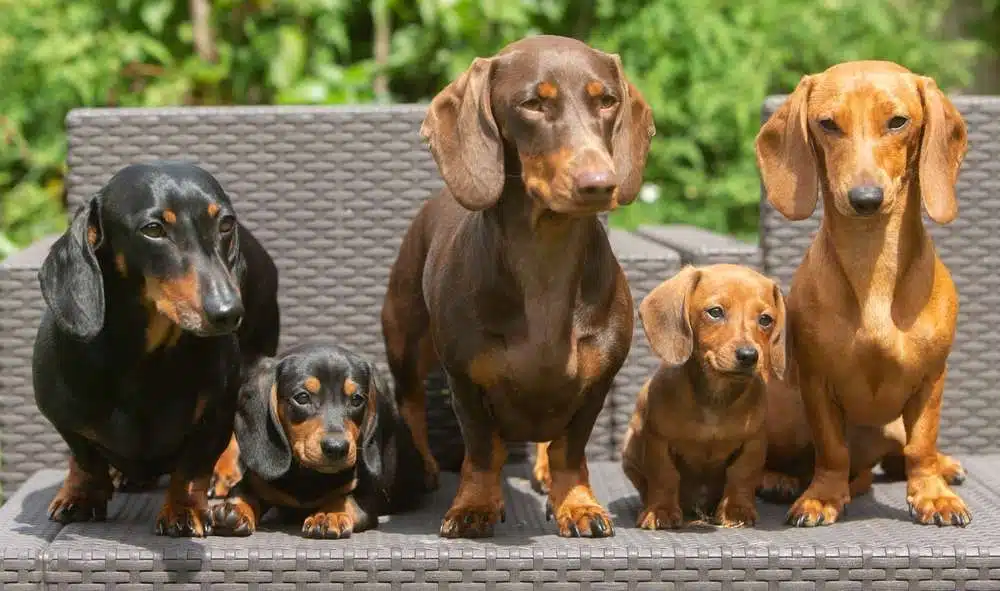
Dachshund
The American Kennel Club recognizes two sizes of Dachshund: standard and miniature. Both are available in three coat types—smooth dachshunds, longhaired dachshunds, and wirehaired varieties. Originally bred in Germany to hunt badgers, foxes, rabbits, wild boar, and track wounded deer, this small hound carries serious working heritage beneath its compact frame.
Though low to the ground, the Dachshund is bold and confident. Its long body and short legs were designed for pursuing quarry underground, and that fearless spirit remains today. Intelligent and loyal, the breed forms strong bonds with its people but often displays an independent, sometimes stubborn streak.
A dachshund puppy quickly reveals the breed’s spirited personality. These dogs can be vocal, determined, and occasionally willful, requiring consistent, firm training. Early socialization helps manage their natural suspicion of strangers and strong prey drive.
Health and weight management are critical for this long-backed breed. Maintaining a healthy body condition reduces strain on the spine and supports a lifespan that often exceeds a decade. Even in smaller homes, Dachshunds need regular exercise and mental stimulation to prevent boredom.
Grooming needs vary by coat type. Smooth dachshunds require minimal upkeep, while longhaired dachshunds need more frequent brushing to prevent tangles. Regardless of variety, this courageous and devoted breed thrives best indoors with its family, where its loyalty and lively personality can truly shine.
Dachshund Breed Guide: Traits, Temperament, And Care Tips

Introduction: Many owners adopt a dachshund and then face stubborn behavior, back problems, and grooming questions. Dachshunds are known for their unique shape and lively personality. They worry about training a wiener dog, choosing the right dog food, and keeping its spine safe.
The dachshund was originally bred to hunt badgers and other burrowing animals. That history explains its long body and bold nature. Dachshunds are popular family companions and are often kept as pets in urban settings due to their small size. This guide will explain coat types like smooth coat, long-haired, and wire-haired. Dachshunds are classified into three sizes: standard, miniature, and kaninchen (rabbit).
It will cover health risks such as intervertebral disc disease. It will give positive reinforcement training tips, grooming steps, and advice on finding a puppy through the American Kennel Club or a dachshund rescue organization.
Key Takeaways

- Dachshunds have a 20–25% IVDD risk; prevent obesity, avoid jumping, use a harness/ramps, and pursue X‑ray, MRI, or laser disk ablation if needed.
- Breed comes in standard (16–32 lbs, 8–9 in), miniature (<11 lbs, 5–6 in), and kaninchen (8–11 lbs); coat types: smooth, long‑haired, wire‑haired.
- Typical lifespan is 12–14 years; studies report miniature average 13.9 years (2018 Japan) and breed average 13.2 years (2024 UK).
- Screen for orthopedic, cardiac, eye, and neurological issues: patellar luxation, osteogenesis imperfecta (17% in wire‑haired), PDA (~2.5×), glaucoma, and epilepsy.
- Use positive‑reinforcement training, crate work, 30–60 minutes gentle daily exercise, regular grooming, and choose reputable breeders while avoiding wiener‑racing and double‑dapple pairings.

History and Origin

Early German Origins
The Dachshund originated in Germany, where hunters bred the dog to track and flush formidable quarry such as the European badger, rabbits, foxes, wounded deer, wild boar, and even wolverines. Early records and artwork from the late 1500s refer to the breed as the “badger dog,” a direct translation of Dachshund. Its long body, determined temperament, and powerful nose were purpose-built for underground work and relentless pursuit.
Development of Type
As the breed gained popularity in Germany, more formal standards emerged. By 1879, an official breed standard had been written, helping define structure, temperament, and working ability. In 1888, the Tekel Club formed to record standards and guide responsible breeding, solidifying the Dachshund’s status as a recognized and organized breed.
Structure and Early Variations
Early Dachshund bloodlines included both straight-legged and crook-legged types. Over time, the crook-legged variety became dominant, giving rise to the distinctive elongated silhouette commonly associated with the modern “sausage dog.” This structure was not ornamental—it allowed the dog to maneuver through tunnels and dense brush with efficiency.
Popularity and Wartime Challenges
The Dachshund reached the United States in the 19th century, with American Kennel Club registrations beginning in 1923 and rising steadily through the 1930s. However, World War I brought anti-German sentiment, damaging the breed’s public image. Some owners temporarily used the name “Badger Dog” to avoid stigma during this period.
The Breed Today
Today, the Dachshund remains one of the most recognizable small hunting breeds in the world. Buyers can choose from three coat varieties—smooth, longhaired, and wirehaired—each retaining the courage and tenacity of the original badger hunter. Though often kept as companions, the breed’s bold personality and strong prey drive still reflect its rugged German hunting heritage.
Physical Characteristics

Dachshunds have a long body, a muscular build, and short legs. They show disproportionately large, droopy ears and paddle-shaped front paws. Dachshunds have a loud, deep bark that can sound like a much larger dog. Breeders sort the breed into three sizes: standard dachshunds, miniature dachshunds, and kaninchen. The standard dachshund is the full-sized variety, recognized by kennel clubs for its specific weight and height ranges, distinguishing it from the smaller miniature and kaninchen types.
Hunters used them as hunting dogs and as badger dogs for scent work. Fans often call them wiener dogs or hot dog because of their shape.
Wiener dogs pack a lot of character into a small frame.
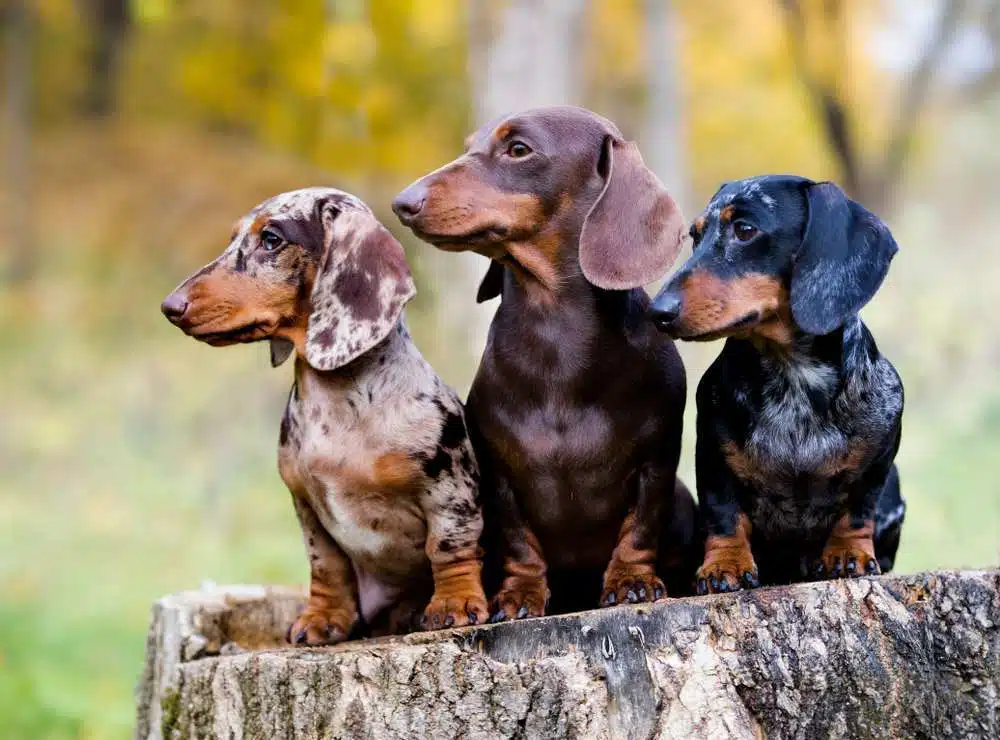
Coat types include smooth coated dachshunds, long haired dachshunds, and wirehaired dachshunds. Colors run from solid red to black & tan, chocolate & tan, dapple, brindle, piebald, and blue. Dachshunds have a variety of colors and patterns, including red, cream, black and tan, and chocolate and tan.
Double dapple dachshunds and dapple patterns can produce multi-colored wall eyes. Dachshund puppies often show the same markings as adults. New owners can check the Dachshund Club of America, a local dachshund club, or dachshund rescue organizations for breed info and support.
Body and Structure
This dachshund dog has a long, muscular body and short, stubby legs. Standard dachshunds weigh 16 to 32 lbs and stand about 8 to 9 inches tall. Miniature dogs stay under 11 lbs and usually measure 5 to 6 inches at the shoulder.
The Kaninchen, at 8 to 11 lbs, gets recognition from the FCI but not the AKC or UKC. Original German dachshunds once weighed 14 to 18 kg, about 31 to 40 lbs.
Large paddle-shaped front feet help the dog dig and enter burrows. Large droopy, flap-down ears keep dirt and seeds out and help funnel scent during hunting. Loose skin and a curved tail add protection in tight tunnels and assist in burrow retrieval.
The tail also gives handlers a visual cue when the dog works underground. Their body puts the spine at risk on stairs, so dachshund owners and families who want a small dog favor one-story homes.
Use a measuring tape to check height and a scale to track a healthy weight for most dachshunds.
Face and Expression

Dachshund faces show a charming, distinctive look. Owners note that dachshunds carry an alert expression and lively eyes.
Eyes usually appear amber, light brown, or green, and kennel clubs favor darker eyes. The dapple gene can create blue, called wall eyes; the Dachshund Club of America allows them, while the American Kennel Club finds them undesirable.
Coat and Color

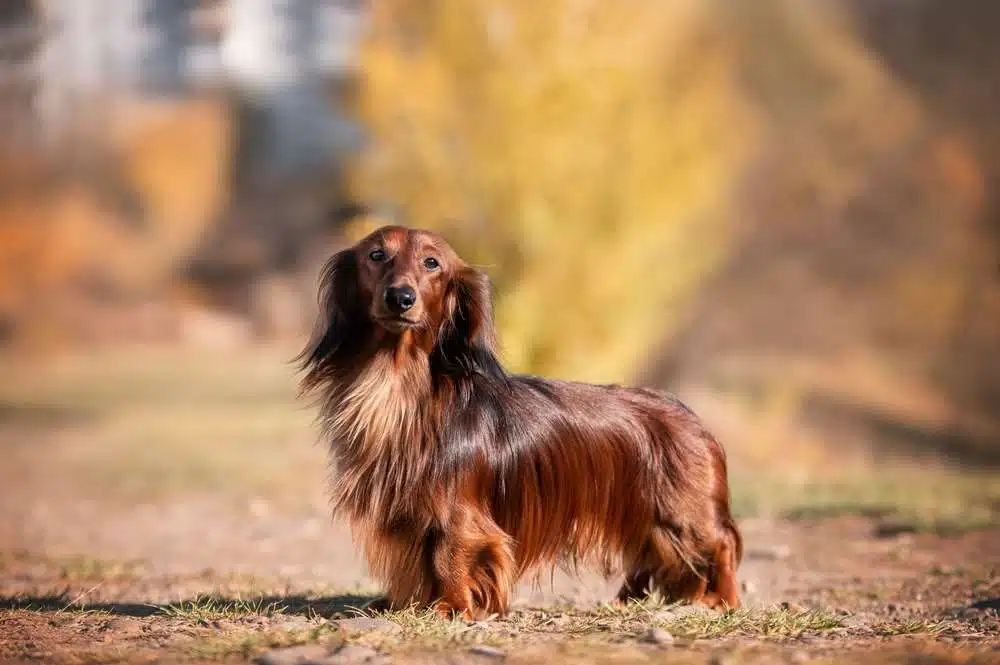
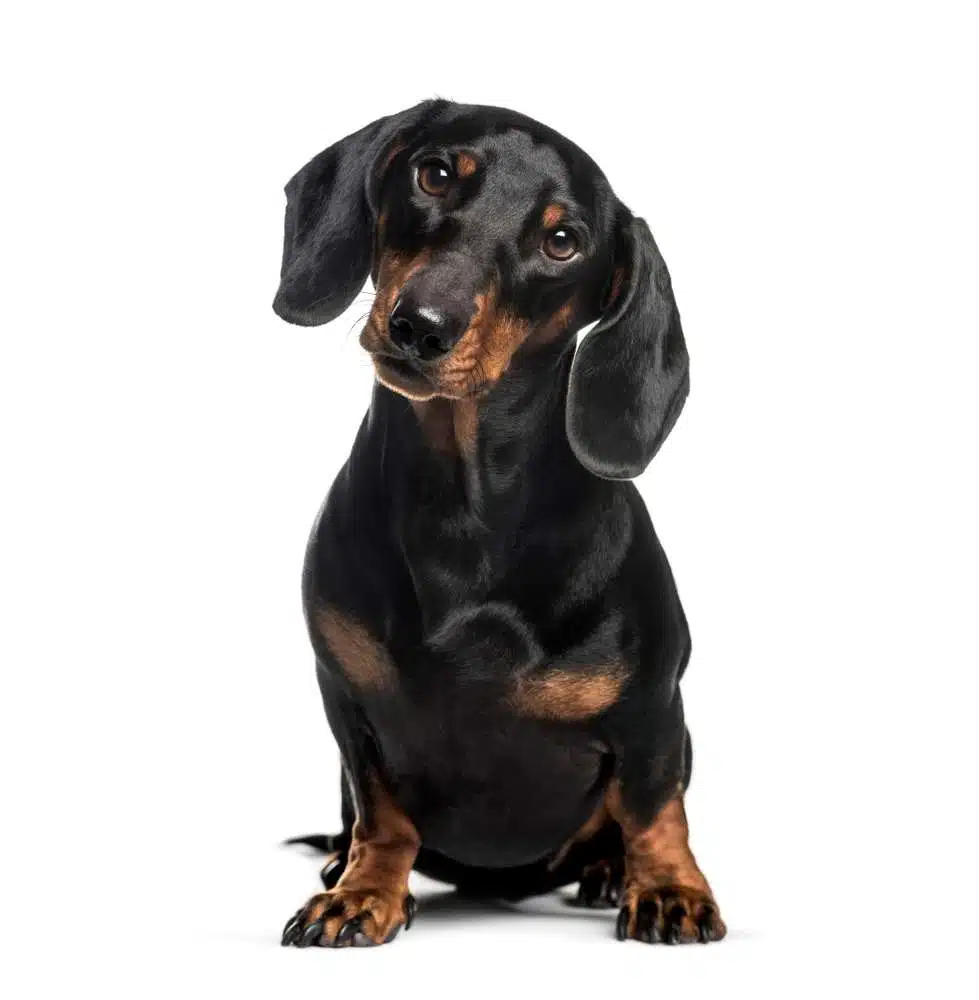
Coat varieties include smooth, long-haired, and wire-haired. The smooth dachshund, also referred to as smooth dachshunds, has a short, shiny coat that requires little grooming, making it a popular and practical choice. Smooth-haired is the oldest variety and points to the original earth dog that worked in burrows. Longhaired dachshunds have a silky, slightly wavy coat and require regular brushing to prevent mats and maintain their elegant appearance. Long-haired types grew from genetic variation or from a spaniel cross.
Breeders developed the wirehaired dachshund in the late 19th century, likely using Schnauzer and German Wirehaired Pointer stock. The wirehaired dachshund has a thick, rough coat that needs regular brushing and occasional stripping to keep it in good condition.
Common colors include solid red, black and tan, chocolate and tan, dapple, brindle, piebald, and blue. Coat patterns list dapple, sable, brindle, and piebald, and tan or cream markings often appear.
The Double Dapple color is disqualified in DCA show rings because it can cause blindness and deafness. Owners should use a slicker brush or fine-tooth comb and plan frequent brushing for long-haired dogs and for wire haired dachshunds.
Adult dachshunds adapt well as family dogs when owners buy from a reputable breeder.
Movement and Gait

Dachshunds move with a low, close-to-ground gait. Muscular legs and a long, flexible body help their stride and balance. Breed standards state this dog breed should be bold and outgoing and call them “faithful, versatile, and good-tempered.”.
Because the dachshund was bred to work in tunnels, owners must protect the spine. Use a well-fitted harness and avoid letting an adult dog jump from furniture. Carry out simple gait analysis at home with video or an activity tracker to spot limping early.
These small dogs keep up with many other dogs in play when owners manage exercise and strength work.
Temperament and Behavior

Bold, brave dachshunds act vivacious and often stubborn. About 50% of adult dogs persistently follow commands. 85% act outgoing and friendly, while 15% show excessive barking.
Miniature dachshunds, per a Japan study, more often refuse to move, bark excessively, and suffer separation-related stress and aggressive behavior. Wirehaired coat varieties rank as the most extroverted, and smooth-haired ones often attach to a single person.
Long-haired pups house-train faster and display less aggression than smooth-haired counterparts. A 2008 University of Pennsylvania study found 20% reported biting strangers, and it linked small breeds to greater aggression.
Male dachshunds face higher rates of separation issues and aggression than females. Strong protective instincts fuel a loud bark and wariness toward strangers, other dogs, and other pets.
Use clicker training, crate work, leash drills, and positive reinforcement to manage barking and ease separation problems. Pick reputable breeders, avoid puppy mills, and consult veterinarians about temperament to help bring home a healthy breed family pet.
Health Considerations

Among dog breeds, dachshunds face a 20 to 25 percent risk of intervertebral disk disease, IVDD. Obesity, jumping, rough handling, and intense exercise raise that risk. Owners of these small animals should give at least 30 minutes of gentle exercise daily and keep weight in check.
Dogs adjust well to steady routines and low-impact play.
Regular veterinary checkups help catch glaucoma, cancer, and early spine problems, issues more common in many dachshunds than in other dog breeds. Veterinarians use imaging, neurological exams, and surgical options, such as laser disk ablation, to treat back injuries.
Skin and coat care may call for more frequent brushing in long-haired types to prevent matting. Life expectancy runs about 12 to 14 years for this breed, and proactive care improves chances of a healthier life.
Common Concerns
Dachshunds face several breed-specific health and behavior risks. Owners must know the top concerns and how to reduce harm.
- Protect the spine. IVDD affects 20–25% of dachshunds; obesity, jumping, rough handling, and intense exercise like wiener racing raise risk. Keep dogs lean, use ramps and harnesses, and get x-ray or MRI for sudden pain.
- Screen orthopedic health. Patellar luxation and osteogenesis imperfecta occur in the breed, and 17% of wire-haired dogs carry osteogenesis imperfecta genes. Ask a veterinarian for an orthopedic exam and genetic testing before breeding or adopting.
- Watch for seizures. Hereditary epilepsy appears in dachshunds, and intelligent dogs may hide signs. Track episodes, seek a neurologist consult, and start anticonvulsant treatment when the veterinarian prescribes it.
- Check eyes and ears. Double dapple dachshunds face higher vision and hearing issues, and Miniature Dachshunds in Japan showed glaucoma in 2.4% of cases. Book ophthalmology exams and BAER hearing tests for at-risk dogs.
- Listen for heart problems. Patent ductus arteriosus appears about 2.5 times more often than in other breeds. Request auscultation and an echocardiogram from a veterinarian, and refer to a cardiologist when needed.
- Address metabolic, dental, and immune risks. Dachshunds show dental disease, Cushing’s, thyroid disorders, and autoimmune problems. Schedule dental care, monitor weight, and run bloodwork to catch endocrine issues early.
- Treat skin and coat issues early. Color dilution alopecia can affect coat health and double dapple patterns raise sensory risks. Consult a dermatologist and avoid breeding two double dapple parents.
- Avoid inbreeding. A study of 42,855 litters linked inbreeding to smaller litter size and higher stillbirth rates. Choose breeders who provide pedigrees, health clearances, and genetic testing.
Lifespan

A 2018 Japan study found miniature dachshunds averaged 13.9 years. That study put most dogs at an average of 13.7 years.
A 2024 UK study set the breed average at 13.2 years, and miniatures reached about 14 years. Italy researchers in 2024 reported a lower average of 11.5 years, and a 2005 Sweden study showed 28 percent of dachshunds died by age 10, versus 35 percent for all dogs.
Typical life expectancy runs 12 to 14 years, and some live to 16 years. Records of dachshund history link hunting lines to different risks, with echoes of the miniature french pointer and runners on greyhound tracks.
Owners should use veterinary tools like radiography and genetic testing, and fit a hound glove style harness while treating the dog as the one and only pup to protect the spine.
Training Considerations

Dachshunds can show strong stubborn streaks that affect training. Patience and positive reinforcement work best for these dogs. Use reward-based methods like a sound marker device, small treats, a leash, and short sessions.
About 50% of dachshunds keep following commands once they learn them. Train early to curb loud barking and protective instincts.
Early socialization cuts fear and aggression in many dogs. Join puppy classes, meet many people, and introduce other pets slowly. Daily walks and play keep their bodies and minds fit.
Wire-haired dachshunds show less separation anxiety and fewer noise fears than other coat types. Long-haired dachshunds often house-train faster than other coat types. Use den crate training and steady routines to lower anxiety and protect your furniture.
Exercise and Socialization

Give your dachshund daily exercise. Socialize early and often.
- Plan 30 to 60 minutes of exercise daily for your dachshund, split into walks and play. Use lead walks, short fetch sessions, and mental games to meet energy needs without overtaxing the spine.
- Limit puppy play to brief bursts to protect the spine. Avoid high jumps and long sprints; young dachshunds need shorter play sessions to prevent back injuries.
- Start socialization early because dachshunds can act independent and stubborn. Use positive reinforcement, a training clicker, and steady routines to build good manners around people and pets.
- Offer tunneled scent games to tap natural instincts; dachshunds excel in earthdog trials where they hunt bait or live rats in tunnels. Use safe underground tube toys and supervised play to channel that drive.
- Avoid formal racing like Wiener Nationals; these events attract fans but breed clubs oppose them due to the risk of back injury. Choose controlled sports such as scent work or low-impact agility instead.
- Install ramps and use a well-fitted harness to reduce jumping and stair strain. Encourage your dog to climb ramps onto furniture and into cars to protect their long spine.
- Train with consistency and positive reinforcement during brief, focused sessions. Pair treats, praise, and a training clicker to reward desired behaviors and to overcome stubbornness.
- Supervise dachshunds around children and during new pet introductions to prevent rough handling and stress. Early socialization helps them accept family life, and adults should watch interactions closely.
Living with a Dachshund

Dachshunds show a stubborn streak and can act aggressive toward strangers and other dogs, so owners must use structured training. Use positive reinforcement, treats, a clicker, crate training, and training classes led by a veterinarian or certified trainer.
Their long back makes them prone to intervertebral disc disease, IVDD, so avoid stairs and jumping, and use a harness, ramps, and an orthopedic bed to protect the spine.
Owners should give at least 30 minutes of gentle exercise daily, such as leash walks and short play sessions, to keep weight down and support spinal health. Short coat varieties need minimal grooming, while long coat and wire coat types require regular brushing and occasional trimming.
Children under ten may harm a fragile spine, so these dogs suit homes with older kids or no children; supervise all interactions. Schedule vet checks and X-ray imaging if your dachshund shows signs of back pain, and follow a vet plan for weight control and physical therapy.
Best Environment

Single-story homes reduce spinal health risks for dachshunds. They adapt well to city living and small spaces like apartments. Owners should offer outdoor access, since these dogs may bark at neighbors or outside stimuli.
Aim for 30+ minutes of walks and gentle exercise each day. Fit ramps or steps to furniture and block stairs to prevent back injuries. Use a harness, leash, and crate for safe outings and calm indoor training.
They are not hypoallergenic and they produce minimal drool. Owners can leave a dachshund alone with proper training to avoid separation anxiety.
Behavior towards Children
Dachshunds can break easily if children handle them roughly. They require supervision during any child interaction. Experienced owners manage their energy and special needs best. Early socialization and consistent training improve how dachshunds behave around kids.
Their protective instincts can make them bark or act defensively. Male dachshunds often show more separation anxiety and aggression than females. Miniature dachshunds may show excessive barking and higher rates of separation anxiety.
Gentle handling prevents accidental spinal injury. Use a leash, a kennel, a simple training tool, and small treats during supervised lessons.
Behavior towards other Pets
Many dachshund owners note aggression toward unfamiliar dogs and strangers. With early socialization, they generally get along with familiar dogs. Their independent streak can make introductions to new pets challenging.
Wire-coated variety tends to be the most outgoing and social, while smooth-coated variety may show more aggression toward other dogs. Training is needed to curb barking and territorial behavior.
Use positive reinforcement and gradual introductions during each meeting to help new pet pairs adapt.
Grooming Needs

Smooth variety needs brushing 1–2 times per week. Long haired and wire haired dachshunds need more frequent care. Dachshund owners should match tools to coat, such as a bristle brush, comb, or nail clippers.
Regular grooming controls shedding and preserves coat health. Bath frequency depends on activity level and coat type. Short coated dachshunds drool minimally compared to other breeds.
Droopy ears require routine cleaning to prevent infections. Use an ear cleaner and soft cotton to wipe the outer canal. Dachshunds face dental disease risk, so brush teeth often. Dog toothbrush and canine toothpaste work well for daily care.
Trim nails with clippers and check paw pads during sessions. Coat checks help spot ticks, mats, or skin issues early.
Nutrition and Feeding

Feed a high-quality, age-appropriate, AAFCO-approved diet to your dachshund. Puppies need 3 to 4 meals daily. Adults do best on two meals each day. Choose diets made for small breeds that use smaller pieces for dachshunds.
Overfeeding raises the risk of obesity and causes back injuries. Avoid table scraps and bones to prevent gastrointestinal issues. Use a measuring cup or food scale and keep a feeding schedule.
Glucosamine, omega-3s, and antioxidants may benefit joint and eye health. Schedule regular veterinary check-ups to track weight and body condition score. Adoption fees often include spay, neuter, vaccinations, and a microchip.
Where to find a Dachshund

Contact the AKC for listings of reputable breeders, groomers, and young dachshunds, including dachshund puppy options. AKC also handles breed registration and mixed-breed enrollment, and it runs an online shop with breed resources.
Local AKC clubs and events connect buyers with breeders at shows and meetings.
It is advisable to prioritize adopting dachshunds from rescue organizations or shelters to provide a loving home to a dog in need. If you decide to purchase a dachshund puppy, conduct thorough research to ensure that the breeder follows ethical practices and prioritizes the well-being of their dogs. When looking for a dachshund puppy, be careful to research and screen breeders carefully to avoid unethical breeding operations like puppy mills. The average price for a dachshund puppy can range from $250 to above $5,000, depending on various factors. Look for breed-specific rescue groups in your area if you prefer to adopt a dachshund.
Check the Dachshund Club of America for breed facts and breeder contacts. Many dachshunds appear in rescue groups and breed-specific adoption programs. Adoption fees often cover spay and neuter, shots, and a microchip.
Similar Dog Breeds

Below are four breeds that share traits with the Dachshund.
| Breed | Similarities | Differences | Best fit for owners who |
|---|---|---|---|
| Foxhound | It shares scent hound ancestry with Dachshunds and breeds like Basset Hound and St. Hubert Hound. | Adults weigh much more, and they hunt in packs across open country. | Good for owners wanting a traditional pack hound and room for long runs. Owners should use a sturdy leash and positive training tools. |
| Greyhound | Some hunting drive and a lean, athletic body echo Dachshund courage. | They are sight hounds not scent hounds, so tracking style differs. Breed classification ties to extinct hounds in some registries. | Best as a calm indoor companion after short sprint sessions. |
| PBGV | Small size and vocal hunting style mirror Dachshund traits. | Coat type is rougher and needs regular brushing with a slicker brush. Not hypoallergenic, they shed and carry scent in coat. | Perfect for active owners who value scent hunting in a tabletop dog. Serves as an alternative to the Miniature Dachshund for similar size and scent work. |
| Otterhound | Strong scenting ability and playful stubbornness resemble Dachshund behavior. | They need heavy grooming and adapt poorly to small apartments. All listed breeds may share similar grooming and exercise needs. Registry lists often name Harrier among related breeds. | Suited to owners with large yards who can manage fur care and swimming. |
Conclusion

Conclusion: you learned dachshund traits, temperament, and basic care. The guide covered coat types, size classes, gait, and eye colors. Use AKC resources, a veterinarian, a clicker, and a slicker brush.
Watch for intervertebral disc disease, patellar luxation, and vision issues. Apply training, socialization, grooming, and balanced feeding to keep dachshunds healthy.
FAQs
1. What traits define a dachshund and dachshunds?
Dachshund are bold, curious, and loyal. They have long backs and short legs. They come in smooth, long, and wire hair types. They were bred to hunt small animals, so they dig and chase. Keep them at a healthy weight to protect their spine.
2. How do dachshund behave and what do they need?
Many people think dachshunds are distant, but they bond closely with caregivers. They can be stubborn with training. Start social play early with other dogs and children. Use short, clear training sessions and reward good steps. Give toys that make them think.
3. What care protects a dachshund from health problems?
Dachshunds face spine risks, often called disc disease. Avoid letting a young dog jump from furniture. Use a harness, not a neck collar, for walks. Keep them fit with daily walks and brain games. Visit the vet for regular checks.
4. Are dachshunds good for families and apartments?
Dachshunds fit well in small homes if you manage barking and exercise. They need daily walks and play, not long runs. Teach calm behavior near guests and kids. If you follow routine care and safe handling, dachshunds make loyal family pets.
References
- https://www.dachshundclubofamerica.org/wp-content/uploads/2022/02/Breed-History.pdf
- https://www.akc.org/dog-breeds/dachshund/
- https://www.petmd.com/dog/breeds/dachshund (2024-06-19)
- https://www.differentdog.com/blog/dachshund-breed-guide (2024-01-22)
- https://www.dachshundhealth.org.uk/temperament-behaviour
- https://www.aspcapetinsurance.com/resources/fun-facts-about-dachshunds/
- https://www.poochandmutt.co.uk/blogs/by-breed/dachshund?srsltid=AfmBOopS91SspOQM7LypPLj2ox5-3TLoENRgrCua_DOmo9TW0Ss8cUAP
- https://www.servicedogtrainingschool.org/blog/dachshund-breed?srsltid=AfmBOooCrxpEIPEuV-gg_hWxgYwIlQKEukEuEUv0otOn4qz7Ett3h5fB
- https://www.borrowmydoggy.com/doggypedia/dog-breed-guides-dachshund
- https://www.pawlicy.com/blog/dachshund-dog-breed/
- https://pmc.ncbi.nlm.nih.gov/articles/PMC10165416/
- https://dogacademy.org/breeds/dachshund (2025-05-29)
- https://www.researchgate.net/publication/271826897_Dog_Breeds_and_Their_Behavior
- Furlyfe Rank See Rank
- Group AKC Hound
- Origin Germany
- Size Smallest
- Weight 11 pounds and under (Miniature)
- Coat Length Short, Medium
- Coat Type Smooth
- Colors Black, Black and Tan, Blue, Brown, Red, Silver, White
- Other Names Teckel, Tekkel, Tekkel Doxie, Weenie Dog, Sausage Dog, Bassotto, Worshond
- Temperament Clever, Courageous, Devoted, Lively, Playful, Stubborn