


Briard
The Briard breed is a large, energetic herding dog from the Brie region of France, originally bred to manage sheep. While it still excels in traditional roles, it has also proven successful in search and rescue, guarding, and as a devoted companion. To stay balanced and happy, this breed needs both physical exercise and consistent mental stimulation.
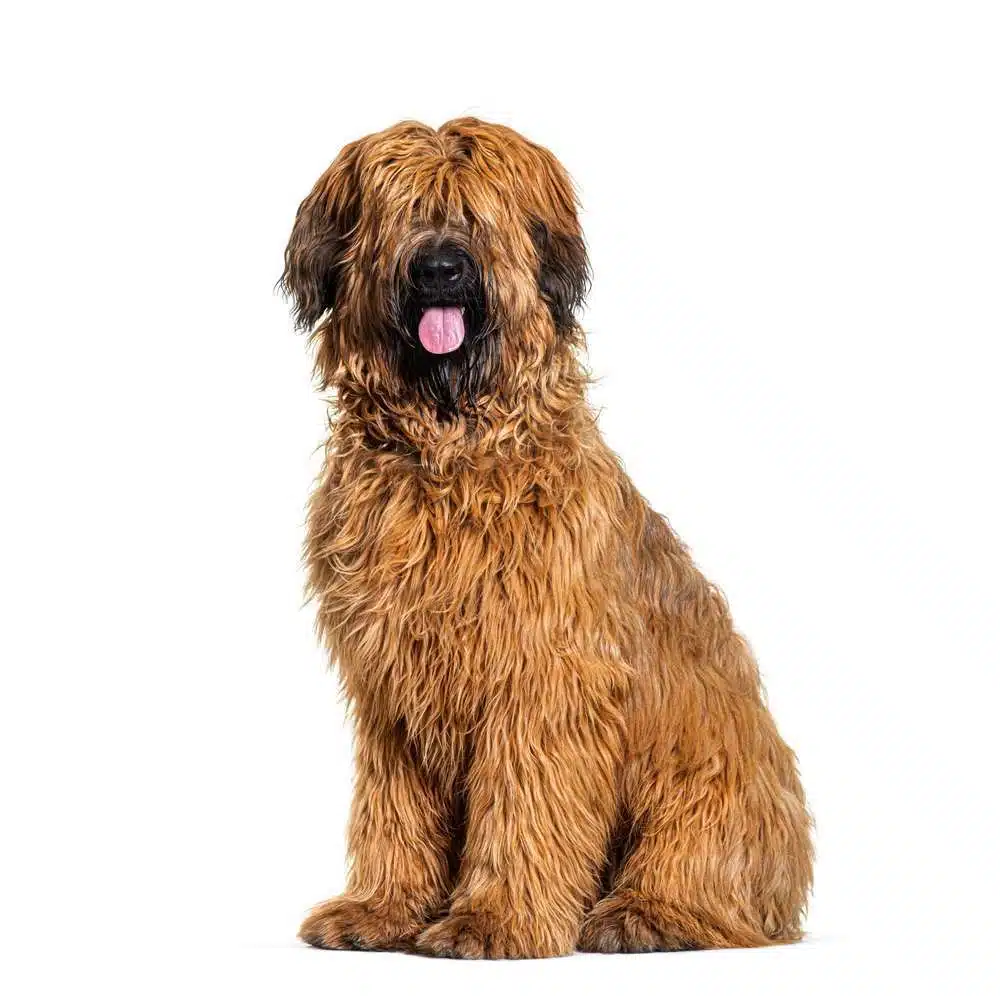
Often described as “a heart wrapped in fur,” the Briard is both protective and affectionate. It forms deep bonds with its family while maintaining a vigilant, watchful nature. Distinctive features such as its expressive eyebrows, beard, double dewclaws on the hind legs, and J-shaped tail make it instantly recognizable.
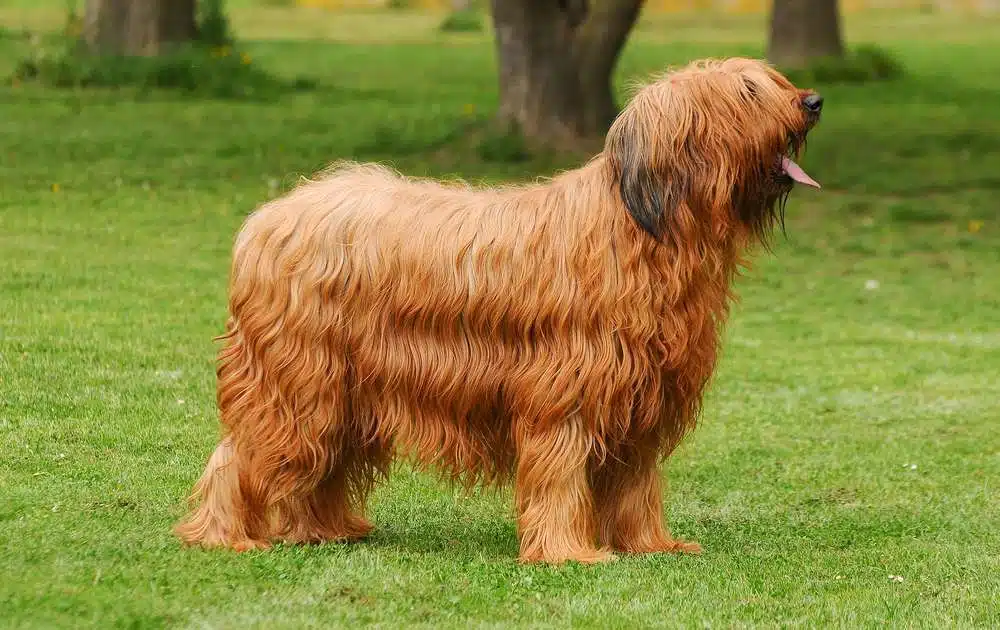
The Briard’s long, shaggy coat consists of a dense undercoat and a coarse outer layer that forms slightly wavy locks. Though it resists dirt and moisture well, it requires regular upkeep—typically a few hours of brushing each week—to prevent matting. Routine ear cleaning and nail trimming are also important parts of its care.
Historically a working farm dog, the Briard is now commonly seen as a family companion or show dog. However, ownership requires commitment. Training and socialization are essential to channel its intelligence and independence into positive behavior.
Early and ongoing socialization is especially important to prevent excessive wariness. Puppies should be raised in stimulating environments and introduced to a variety of people, places, and experiences. Continued exposure through training classes and regular outings helps build confidence.
Despite its working background, the Briard thrives as a family dog and prefers to be close to its people. While a fenced yard is beneficial, it should not be relegated outdoors. This breed values companionship deeply and does best when included as an active part of family life.

Briard Dog Breed Guide: Temperament, Care, And History

You want a loyal, smart dog but worry about grooming, training, and health. Many owners ask if a Briard puppy will fit family life, dog sports, or a busy home.
The American Kennel Club lists the Briard in the Herding Group, a nod to its work with French farmers and other herding dogs. This guide will explain temperament, training with positive reinforcement, grooming tips like daily brushing and a rake brush, common health concerns such as congenital stationary night blindness and hip dysplasia, and how to find reputable breeders or AKC registered puppies.
It will help you pick the right adult Briard and care for your new dog. Keep reading.
Key Takeaways

- Originated in Brie, France; Paris shows began 1865, Les Amis du Briard formed 1909, FCI recognized breed in 1954; AKC lists it in Herding Group.
- Males 23–27 in, females 22–25.5 in, 55–100 lbs; lifespan 10–12 years, median 12.6 years (2024 study).
- Long, wavy double coat needs weekly brushing and regular stripping or rake work to avoid mats; expect up to two hours of daily exercise.
- Use positive‑reinforcement training and require eye exams, Canine Eye Registry Foundation records, OFA hip clearances, and AKC DNA tests to screen csnb, vWD, and hypothyroidism.
History and Origin

Ancient Roots in the Brie Region
The Briard traces its origins to the Brie region, the northern dairy belt of France. Known historically as the chien berger de brie, this rugged herding dog appears in records and textile art dating back to the 8th century. These early depictions link the breed to the era of Charlemagne, highlighting its long-standing role in pastoral life.
A Farmer’s Herding and Guardian Dog
For centuries, French farmers relied on the Briard to herd sheep and guard property. Its intelligence, independence, and protective instincts made it invaluable across rural landscapes. Unlike some herding breeds that focused solely on livestock movement, the Briard balanced herding duties with strong guarding capabilities, protecting flocks and farms alike.
Introduction to America

The breed’s journey to the United States began in 1789 when Thomas Jefferson imported a Briard named Bergère. Later, Marquis de Lafayette further supported the breed’s establishment in America. These early introductions helped lay the foundation for the Briard’s presence outside France.
Formal Recognition and War Service
Briards gained formal attention in France when they appeared at a Paris dog show in 1865. The national breed club, Les Amis du Briard, formed in 1909, and interest continued to grow. During World War I, the French army used Briards as sentry, rescue, and supply dogs, proving their intelligence and bravery under demanding conditions.
Modern Recognition and Preservation
The Fédération Cynologique Internationale officially recognized the breed in 1954, marking its global acceptance. Registrations grew significantly in the late 20th century, reflecting renewed interest in the breed. Today, responsible breeders continue to preserve the Briard’s working heritage, producing dogs that maintain their historic role as both capable herders and loyal guardians.
Physical Characteristics

Long, wavy, double-layered coat grows six inches or more. Coat forms a protective outer coat and a dense undercoat. Undercoat rakes and slicker brushes help remove dead hair and prevent mats.
Grooming needs range from daily to monthly depending on activity and coat texture.
Large, calm eyes should be black or black-brown under the breed standard. Yellow eyes can disqualify a dog from shows and stud-book listings. Well-proportioned head and strong neck sit on a muscular frame that reflects its sheepdog roots.
Owners should expect a large dog with dense double coats, long hair, and a clear protective instinct. Reputable briard breeders run DNA tests and log eye results with the Canine Eye Registry Foundation to show health clearances.
Body and Structure
Males stand 23–27 inches and females stand 22–25.5 inches. Weight ranges from 55–100 lbs (34–38.5 kg). The body looks strong, agile, and square in structure. A long head complements the breed’s muscular build and Gallic elegance.
Sloping shoulders and flexible hindquarters give a smooth, gliding gait. Double dewclaws on the hind legs are a required breed standard. The UK Kennel Club classifies the Briard in the Pastoral, large dog group.
Originally bred as sheep herding dogs, they still work as guard dogs and faithful dog companions.
Face and Expression

Eyes set wide and a black nose give the Briard a dignified, alert look.
A Briard shows shaggy facial hair, with a mustache and a beard that give the dog a unique, attractive appearance. A peek-a-boo hairdo parts naturally in the middle on the head. The head stands out as an impressive hallmark in the breed standard.
Ears may be floppy, or they may be pointed. A large, black nose adds to the dog’s dignified expression. Eyes sit well apart and stay dark, which conveys clear intelligence. That alert, confident expression fits this dog breed as a watchdog, and it makes the animal a good family dog for many adult dog owners who keep other pets or other dogs.
Proper briard care uses a brush and shears to keep facial hair clear of the eyes.
Coat and Color

The Briard dog breed has a double coat: a long, coarse, shiny, dry, wavy outer layer and a soft, tight undercoat. The coat lies flat against the body in slightly wavy locks and gives the dog a rustic look.
Colors run from solid black, slate gray, blue, and white to shades of tawny and mixes like tawny and gray, black and gray, black and tawny, and fawn with or without black overlay.
This herding breed is not hypoallergenic and sheds at a low to moderate level. Owners must brush the fur regularly with a brush and comb to prevent matting and tangles. Bathe with dog shampoo to remove debris.
It suits active dogs and great family dogs, but needs steady grooming and nail trimming as part of care.
Movement and Gait

A powerful square body structure lets Briard dogs move with smooth, gliding strides. Their gait looks flexible and effortless and helps in herding tasks and herding trials. A strong neck and muscled front legs drive their reach and power.
This physicality reflects their working heritage as herding breeds and working dogs.
Two or three dogs can manage about 700 sheep on open range. They stay robust and sturdy across rough terrain and handle guard work on farms. Judges prize their gait as a breed hallmark in the show ring.
Owners should give them enough exercise, use gait analysis, and provide proper training to keep them sound.
Temperament and Behavior

Briards stay fiercely loyal and protective of their families. They prove intelligent, independent, and often willful. Owners must use patient, consistent obedience training and dog training methods.
Young dog socialization shapes friendly adults and eases their natural suspicion of strangers.
They show a social temperament and usually get along with children. Supervise play with other animals and cats because Briards have a high prey drive. Assertive attitudes and strong opinions mean clear rules plus regular mental stimulation keep them balanced.
Work tasks suit their strong work ethic, or boredom can lead to digging, loud woof, or other unwanted behavior. Keep an eye on the dog’s weight, feed high quality dog food, and handle a pregnant Briard with calm routines.
Health Considerations

The briard originated in northern France in the Middle Ages. Breeders used them as herders and guards for wounded soldiers. They can be naturally suspicious of strangers. Similar breeds such as the Beauceron and other large breeds face health conditions like hip dysplasia, bloat, cancer, and eye diseases.
Genetic disease testing can find recessive problems like csnb, retinal pigment epithelial dystrophy, and amaurosis that cause vision loss.
A median lifespan sits near 12.6 years, while most live about 10 to 12 years. Regular veterinary examinations can screen for kidney disease and catch cancer early. Keep weight down with high-quality nutrition and avoid human foods that add calories.
Provide at least two hours of exercise daily to lower obesity and bloat risk in this active breed.
Common Concerns
Briards face several inherited and acquired health risks. Owners should make screening and clearances a top priority.
- Ask about cataracts, progressive retinal atrophy, hereditary retinal dystrophy, and congenital stationary night blindness. Get a veterinary ophthalmologist exam and DNA tests via the AKC DNA Program before you buy.
- Have hips and elbows x-rayed and cleared by the Orthopedic Foundation for Animals. Ask the breeder for OFA certificates and signed hip and elbow clearances before you take a puppy home.
- Test for von Willebrand disease and hypothyroidism with genetic panels and blood screening. Treat early and plan long-term care with your veterinarian.
- Feed small meals, avoid vigorous exercise for an hour after eating, and discuss prophylactic gastropexy with your veterinarian to lower bloat risk.
- Briard health remains relatively good, yet cancer can occur. Schedule regular wellness exams and check any lumps or weight loss right away.
- Expect puppy prices from $1,000 to $1,500, with some litters reaching $3,000 depending on breeder and clearances. Get health clearances from a responsible breeder and review AKC testing or equivalent results.
- Use a whole-health plan that includes genetic panels, thyroid testing, orthopedic x-rays, and eye exams. Keep records of results and update tests when new panels or tools become available.
Lifespan
The average lifespan of the Briard runs 10 to 12 years. A 2024 study found the median longevity at 12.6 years. That figure sits close to the dog average of 12.5 years and marks the breed as long-lived relative to some other large breeds.
The breed’s strong constitution supports its working history. Genetics and hereditary diseases can change life expectancy. Regular veterinary care and routine health screenings add years for many owners.
Good nutrition, steady exercise, and early orthopedic screening also help maintain health.
Training Considerations

Briards are intelligent and highly trainable, yet often willful due to an independent nature. Positive reinforcement works best for this breed. Use a training device, a flat leash, a crate, and a harness to build good habits.
Early socialization during the first 16 weeks helps them accept new people and places. Training gives needed mental and physical exercise that cuts down on bad behavior.
Owners should have some prior experience and plan for extra training time. Consistency and patience speed progress during puppy and adult lessons. Boredom and loneliness can spark destructive acts like chewing, barking, and digging.
Try jogging, hiking, herding work, agility practice, and obedience classes to keep a Briard busy. A qualified trainer or group class helps owners manage willful choices and build clear rules.
Exercise and Socialization

Give a Briard 30 to 60 minutes of exercise every day, with brisk walks and interactive games.
Add hiking, herding practice, or agility runs in large, secure spaces to meet their need for substantial physical and mental activity.
Mix in puzzle toys, marker training, and obedience drills for daily mental and physical exercise to prevent behavioral issues.
Begin socialization in the first 16 weeks and expose puppies to varied people, settings, and other animals.
Healthy social habits and steady exposure lead to better adult adaptability and good behavior.
Active households that include regular tasks and classes help Briards thrive and use energy well.
Living with a Briard

Briards are intelligent, loyal, and affectionate. They often view children as part of their flock and stay alert to strangers. Owners must provide at least two hours of daily exercise, with vigorous walks and mental stimulation.
Early socialization and positive reinforcement training help manage their independent streak.
Their long, wavy, double-layered coat needs regular maintenance to avoid matting. Brush and comb weekly and book groomer visits for trimming. Visit a veterinarian for regular health evaluations to screen for hip dysplasia and other issues.
Training tools like a leash and harness, plus a generic training aid, help during walks and lessons.
Best Environment
Active families fit this breed best. They thrive in semi-rural areas with large gardens and a secure fenced yard. Plan on over two hours of daily exercise. Use long line walks, agility sessions, and tracking devices to measure activity.
Owners should be assertive and act as a clear, consistent leader with firm boundaries. Those without experience should think twice, since this breed has high energy, a strong work drive, and a pronounced prey instinct that may upset small pets.
Give jobs and mental stimulation, like obedience training, crate training, socialization classes, and interactive feeders. With proper training they will tolerate short periods alone, yet they remain protective and alert and need ongoing socialization.
Behavior towards Children
Briards rate a 3 for behavior with young children, which means they need supervision. They can be good with kids, but an adult must watch interactions. The breed is best for families without very young children, while older children and teens can join training and chores.
They stay loyal and affectionate and often seek companionship with family. Children and dogs need mutual respect and clear boundaries to prevent rough play. Use positive reinforcement, a sound marker, and a lead during short, supervised sessions to build a strong bond.
They may be too exuberant for very young kids or elderly household members, but they enjoy lively family activities.
Behavior towards other Pets
A Briard can be wary of unfamiliar pets and people, so owners must plan introductions. Early socialization during the first 16 weeks helps shape calm responses to other animals. Socializing with other animals is essential for a well adjusted adult.
Owners should introduce a cat before bringing a Briard home to set a clear hierarchy.
Choosing opposite sexes for household dogs can lower the chance of conflict. Their strong prey drive means they may not fit homes with small animals such as rabbits and birds. Proper introductions with a leash, a trainer, and a crate support safe meetings and friendly bonds.
They can be sociable with other dogs if owners introduce them properly. Use steady management and ongoing training to help them live peacefully with other pets.
Grooming Needs

Brush the coat at least once per week to prevent matting. Line brushing and combing reach the undercoat and clear twigs and dirt.
Start grooming early, during puppy weeks, to accustom the dog to handling. Bathe the dog when the fur traps debris, using a pet shampoo for thick coats. The coat will tangle and form mats without steady care.
Compared to other long-coated breeds, Briards have moderate grooming needs. Owners who cannot maintain the coat should hire a professional groomer. The AKC S.A.F.E. Grooming program offers safe, effective techniques and tool guidance.
Nutrition and Feeding

Feed adult Briards high-quality dog food at least twice a day. Choose a high-protein diet that fits age, weight, activity level, and health needs. Young Briards, or puppies, need three meals each day and can use Purina’s Growing Pup program for advice and discounts.
Split daily calories into smaller, frequent meals, which lowers bloat risk compared to one large feed.
Control calories to prevent obesity, and count treats toward the daily total. Talk with your veterinarian for meal planning at each life stage and for specific health concerns. Keep fresh water in a bowl at all times to avoid dehydration.
Where to find a Briard

Contact the Briard Club of America, Inc., established in 1928, at Jami Groce, (517) 676-8546, [email protected], 585 HARPER RD, MASON, MI 48854-9447. Visit www.briardclubofamerica.org and www.briardrescuetrust.org for breeder and rescue information.
Use the AKC Marketplace to connect with breeding programs and view listings. Explore the AKC Breeder Toolkit and the BRED WITH H.E.A.R.T. program to check breeder practices. AKC provides registration services for purebred, mixed breed, and non-AKC purebreds, plus a Puppy Preparation Online Course and Puppy folders for new owners.
Expect Briard puppies to cost $1,000 to $1,500, with some pedigrees priced up to $3,000.
Similar Dog Breeds

The Briard is FCI breed number 113, and it shares energy and working drive with many large herding breeds. Owners should weigh Beauceron, Polish Lowland Sheepdog, Berger Picard, and Pyrenean Shepherd, plus Bouvier Des Flandres, Bernese Mountain Dog, and Schapendoes.
| Breed | Similarities | Differences | Best Fit |
|---|---|---|---|
| Beauceron | Large herding drive, strong protective instincts, energy comparable to the Briard | AKC recognized in 2007, lifespan 10–12 years, more muscular build with a coarser coat | Owners seeking a steady, high-drive guardian that thrives with structured work |
| Polish Lowland Sheepdog | Strong herding instincts and high trainability similar to the Briard | AKC recognized in 2001, lifespan 12–14 years, smaller size with a dense double coat | Those wanting a compact herder that requires consistent grooming and training |
| Berger Picard | Pastoral trainability, protective nature, energy similar to large herding breeds | AKC recognized in 2015, lifespan 12–13 years, rough coat and relatively rare bloodlines | Households seeking a rustic, lively herding companion with moderate grooming needs |
| Pyrenean Shepherd | Agile herding drive, high trainability, protective tendencies like other pastoral breeds | AKC recognized in 2009, lifespan 17–19 years, smaller and lighter with quick, agile movement | Active handlers looking for a long-lived, fast, and energetic herder |
Conclusion

This conclusion recaps the breed history, herding role, care needs, temperament, health notes, training tips, and grooming tasks. Practical tips include weekly brushing, vet checks, early social skills, and clear training routines.
AKC records, FCI recognition, and research on retinal gene therapy show breed trends and health progress. Use tools like the AKC marketplace, genetic testing, ophthalmology checks, and a feeding plan to cut risk and save time.
Many owners report deep loyalty and clever problem solving after they invest time and set firm rules. Take the next step, meet rescue groups or registered breeders, and welcome a Briard into a prepared home with pride.
FAQs
1. What is the Briard’s temperament?
The Briard is a large, loyal working dog. It stays alert and protects its family. It can be wary of strangers. Early socialization and consistent training keep it calm and reliable.
2. How much care and grooming does a Briard need?
Daily brushing keeps the coat free of mats. Plan full grooming every few weeks. Check ears and trim nails as needed. Give at least 60 minutes of exercise each day, with walks and play.
3. What is the Briard’s history and typical health profile?
The Briard began in France as a working dog for shepherds and farm work. Clubs note a long history of service and utility. Typical life span is about 10 to 12 years. Owners should watch for common health issues and get regular vet checks.
4. Is a Briard a good family dog and what training does it need?
Briards often fit active families and bond closely with people. They can protect the home when they get proper socialization. Use firm, steady training with short sessions. Start training and socialization in young dogs and teach clear rules for guests and other animals.
References
- https://www.petmd.com/dog/breeds/briard (2024-07-16)
- https://www.akc.org/dog-breeds/briard/
- https://www.thesprucepets.com/briard-dog-breed-profile-4768988
- https://wagwalking.com/breed/briard
- https://www.houndsy.com/blogs/modern-tails/understanding-briard-temperament-your-guide-to-this-unique-breed?srsltid=AfmBOorVQGPmIqW3We7Qd3Ipou1sAZRZcaG96RVdGoFZi63cTTTeQ_jW (2025-04-10)
- https://pethelpful.com/dogs/briard (2024-11-20)
- https://showsightmagazine.com/living-with-the-briard/ (2024-07-15)
- https://www.briard.com/living.html
- https://www.researchgate.net/publication/271826897_Dog_Breeds_and_Their_Behavior
- Furlyfe Rank See Rank
- Group AKC Herding
- Origin France
- Size Large
- Weight 70 to 90 pounds
- Coat Length Long
- Coat Type Double
- Colors Chestnut,Tan
- Other Names Berger De Brie, Berger Briard
- Temperament Faithful,Fearless,Intelligent,Loyal,Obedient,Protective