
Boston Terrier
The Boston Terrier is the perfect combination of style and attitude! He’s friendly, loves to move around, and has an enthusiasm for life that can’t be beat. This little pup gets along with everyone he meets – from kids to other animals. Although this small companion dog can look tough, but they are incredibly affectionate and gentle natured at heart!
The Boston, a breed of dog created in the United States, is known for its loyal and loving companionship. Not only does it make an ideal pet due to its small yet sturdy size, but also because of their exceptionally smart attire! Their coat markings look almost as though they are wearing a tuxedo – perfect for any occasion! The bond between this pooch and its humans will be strong with plenty of fun times ahead.
The Boston Terrier is a perfect companion, regardless of whether you prefer to stay at home or engage in some canine sports. Brimming with intelligence and agility, they can easily learn all sorts of tricks or take part in obedience, racing or other activities. Plus – no need for worrying about their temperament; these friendly animals, if socialized early on, will get along well with children, strangers, and other household pets!
The Boston (also known as a Boston Bull Terrier) is an exceptional breed, both easy to house-train and not prone to excessive barking. Thanks to its low shedding coat, the Boston requires minimal grooming – making them perfect for those living in smaller spaces like apartments or even those on the go! Weighing between 10 and 25 pounds, this strong little pup can fit right into your active lifestyle.
The Boston Terrier is an ideal and all-American companion for anyone who wants a loyal friend. This breed was crafted to be the perfect pal, but like any dog, they need frequent exercise, training and socialization to stay out of trouble. The only downside with this breed is that they can be brachycephalic which means these dogs can have trouble breathing in extreme temperatures or when distressed. Nevertheless, you won’t find another pup as faithful as the Boston Terrier!
With his handsome good looks, the black-and-white coated Boston Terrier is perhaps the most popular of this breed. Nevertheless, he can also be found in a variety of dark colors – including a unique brindle pattern. What they all have in common though is their captivating facial expressions with square jaws and those marvelous ears. (There is no health benefit to cropping their ears)

Boston Terrier Breed Guide: Temperament, Care, And Fun Facts

Many new owners ask if a Boston Terrier will fit their home and family. They worry about breathing, training, grooming, and how the dog will get along with children and other pets.
The American Kennel Club ranked the Boston Terrier 23rd in registrations for 2024. This breed has a tight, tuxedo-like short coat and a compact body. The breed can face brachycephalic syndrome and patellar luxation.
This guide will explain temperament, the breed standard, basic care, grooming mitt tips, training, and how to find a reputable breeder or a Boston Terrier club. You will get clear steps to spot health issues and avoid undesirable behaviors.
Key Takeaways

- AKC ranked the Boston Terrier 23rd in registrations for 2024; weight classes: <15, 15–<20, 20–≤25 lbs; height 9–15 inches.
- Expect brachycephalic risks: BOAS, narrow airways, anesthesia risk, and over 80% of litters delivered by cesarean section.
- Average lifespan about 11.8 years; monitor for hereditary cataracts, skin allergies, and low hip dysplasia prevalence (0.36% versus 3.52%).
- Use early socialization, positive reinforcement, crate training, short daily exercise (30–60 minutes), and vet screening for breathing and eye issues.
History and Origin

Origins in Massachusetts
The Boston Terrier originated in Massachusetts during the late 19th century. The breed’s foundation is commonly traced to a dog named Hooper’s Judge, a 32-pound dog bred with a smaller female named Gyp around 1870. Early ancestry also included Burnett’s Gyp, which came from a short-faced bulldog line associated with Burnett House in Southborough, Massachusetts, built in 1847.
Development from Bulldog-Type Dogs
Early breeders developed the Boston Terrier using Old Boston Bulldogs and other bulldog-type dogs, some weighing up to 44 pounds. These crosses produced compact, muscular dogs with distinctive short faces and lively personalities. While some early bloodlines were connected to pit fighting and blood sport activities common at the time, breeders gradually shifted focus toward creating a more refined companion dog.
From American Bull Terrier to Boston Terrier
Initially, breeders referred to the developing type as the American Bull Terrier. However, club members later chose the name Boston Terrier to honor the breed’s strong connection to the city of Boston. The Boston Terrier Club formed in 1891 to establish breed standards and promote responsible breeding.
AKC Recognition and Rising Popularity
The American Kennel Club officially recognized the Boston Terrier in 1893, making it one of the first breeds developed in the United States to gain AKC recognition. Over time, breeders emphasized temperament, style, and companionship, helping the breed become increasingly popular in American households.
The “American Gentleman”
As the breed evolved away from its fighting ancestry, the Boston Terrier became admired for its tuxedo-like markings, friendly nature, and polite demeanor. These traits earned it the nickname “The American Gentleman.” In 1922, Boston University adopted a Boston Terrier named Rhett as its mascot, further cementing the breed’s cultural connection to Boston and American life.
Physical Characteristics

Compact, tuxedo-clad, and full of personality.
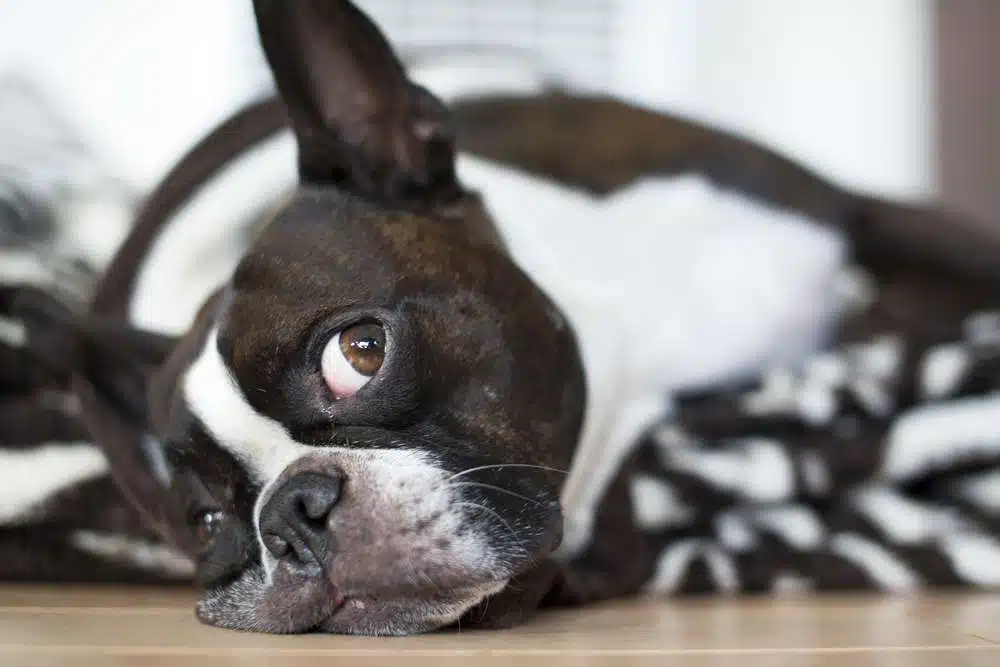
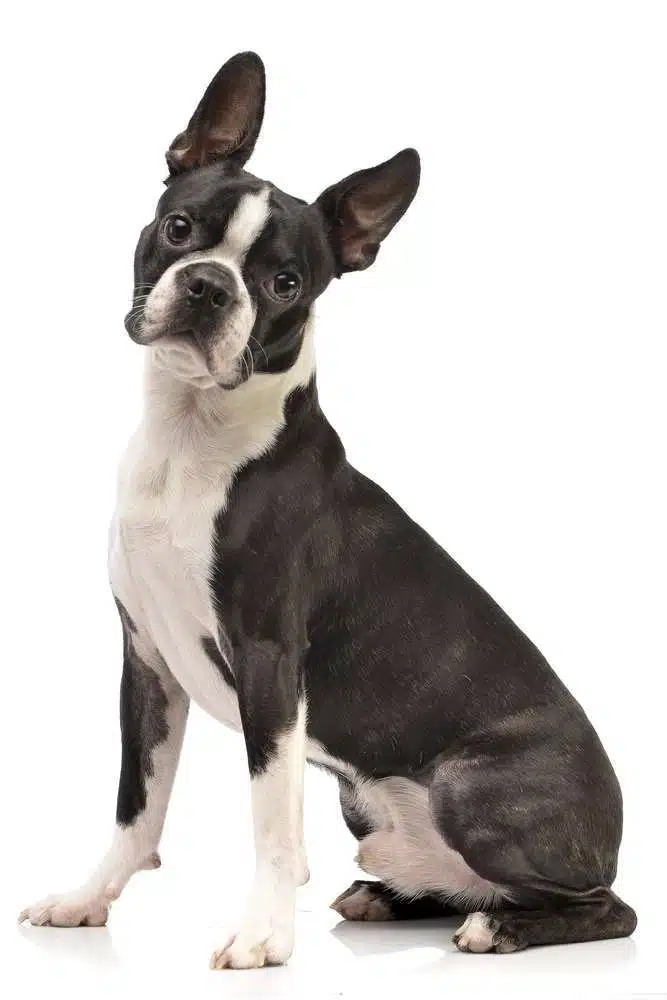
Compact and sporty, the Boston terrier breed shows a tuxedo-like coat and a fine coat. Large, round, wide-set eyes and round heads give the face a soft look. Erect ears add alertness to the expression.
They fall into three weight classes, including under 15 pounds, 15 to under 20 pounds, and 20 to not exceed 25 pounds. As brachycephalic dogs, many Boston terriers tend to have a short muzzle and flat face that may affect breathing.
Owners keep the fine coat healthy with an occasional bath and a soft bristle brush, and a grooming brush works well for daily maintenance.
Body and Structure
The Boston Terrier dog shows a square head and erect ears. It has an arched neck and a broad chest. Short muzzles stay wrinkle-free and sit above an even or slightly undershot bite.
This dog ranks among small dogs and has a muscular, sleek body with a short tail that may curl or lie straight. The short tail must not exceed 2 inches (51 mm). Many owners call them good family dogs.
Judges check conformation using a measuring tape in shows.
Face and Expression

Large, round, friendly, wide-set eyes give Boston Terriers a kind, curious, or mischievous look. Eyes often appear dark brown and shine with expression. A square head and short, wrinkle-free muzzle make their face easy to read.
A white stripe or white blaze often frames the forehead and nose.
That expressive face and gentle nature help make them a popular breed and well suited for apartment dwellers. Owners of brachycephalic breeds like the French bulldog and English bulldog see similar traits, and reputable breeders stress early socialization so intelligent dogs do not develop undesirable behaviors.
Coat and Color

Boston Terriers have a short, smooth coat that lies close to the skin. Colors include black, brindle, or seal, black with a red cast. The breed’s distinctive markings include a white chest, a muzzle band, and a band between the eyes.
White collar, white forelegs, and white on the hocks of the rear legs are desired by judges.
Kennel clubs do not accept solid or unlisted colors. Owners should groom lightly to keep skin oils healthy. Light brushing removes loose hair and spreads natural oils across the coat.
Some owners compare this coat to that of French Bulldogs, yet judges focus on the required markings.
Movement and Gait

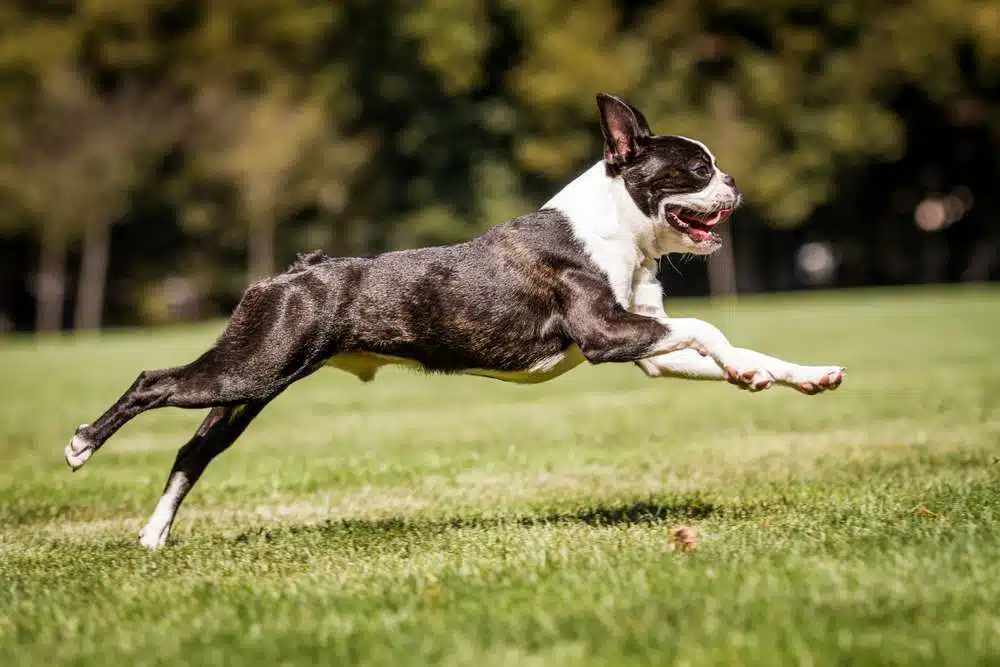
They move with a jaunty, rhythmic step that looks light and quick, a hallmark of the dog breed. Gait analysis and treadmill footage show the steady rhythm and confirm their alert, energetic style.
Their round eyes scan the area as they trot, showing that lively, energetic disposition.
Use daily walks and short play sessions to match their pace and burn energy. Keep sessions brisk and varied to feed their curiosity and uphold impeccable manners. Ask a vet for gait analysis if you see stiffness or an uneven stride.
Temperament and Behavior

Boston Terriers stay gentle and friendly, with a happy-go-lucky streak and a strong sense of humor. Owners find them eager to please and easy to train using positive reinforcement, a sound marker, and short sessions with a leash.
Most remain usually quiet and will bark only when necessary, though some lines will bark excessively without early socialization. Socialization at an early age helps them accept children, the elderly, and other animals, even other dogs and similar breeds like bull terriers or Boston bulls.
Breeders such as William O’Brien, Edward Burnett, and a Bostonian named Robert shaped the breed in the 19th century, using two breeds that were originally bred for blood sports. Hooper’s Judge, the dog named Judge, and the first Boston Terrier appear in early records and link to the American bull terrier club and early dog sports.
Protective instincts can surface as territorial or aggressive behavior without training, so use crate training and reward-based practice to shape calm habits. Owners should watch a Boston Terrier’s cues for stress, since behavior can change if owners ignore training or if health problems like cherry eye affect comfort.
Health Considerations

Owners should expect breathing issues. This brachycephalic breed often has narrow airways and can develop brachycephalic obstructive airway syndrome. Average life span sits at about 11.8 years, shorter than many purebred and crossbred dogs.
Over 80% of litters arrive by caesarean section. Puppies can need extra neonatal care after surgical delivery.
Skin problems occur often, with atopic dermatitis and allergic skin disease common in the breed. Hip dysplasia shows up in only 0.36% of dogs, far below the 3.52% seen across other breeds.
Hereditary cataracts can harm sight and call for prompt eye exams and genetic testing. Work with a veterinarian for skin allergy tests, hip evaluation, and breathing assessments.
Common Concerns
Boston Terriers face specific health risks because of their short muzzles and facial folds. The Boston Terrier is the official state dog of Massachusetts.
- Brachycephalic obstructive airway syndrome causes stridor, stertorous breathing, airway obstruction, cyanosis, and risk of laryngeal collapse. Keep dogs cool, avoid heavy exercise, then schedule a veterinarian airway exam with a stethoscope and oxygen meter before activity.
- Exophthalmos makes the bulging eyes prone to injury, drying, and corneal ulcers. Protect eyes during play, use lubricating drops when needed, and seek prompt veterinary care for redness or cloudiness.
- UK Kennel Club survey showed over 80% of Boston Terrier litters were delivered by cesarean section, and females were 12.9 times more likely to have dystocia. Work with a breeder and schedule surgical delivery with a reproductive veterinarian.
- Skin problems include skin fold dermatitis, atopic dermatitis, allergic skin disease, demodicosis, hyperadrenocorticism, mast cell tumors, pattern alopecia, and zinc-responsive dermatosis. Check folds weekly, treat infections early, and ask a dermatologist vet for allergy testing.
- Pharyngeal gag reflex issues can cause choking and swallowing problems during feeding or dental care. Use small kibble, supervise meals, and arrange a vet evaluation of swallowing and dental health.
- Anesthesia and surgery carry extra risk because of airway instability and possible laryngeal collapse. Choose vets experienced with brachycephalic breeds, plan preoperative oxygen support, and expect airway tools during procedures.
- Monitor breathing and skin at home and keep regular vet checks. Use a stethoscope or oxygen meter during exams, record any stridor or cyanosis, and act fast if breathing worsens.
Lifespan
Most Boston Terriers live 11 to 13 years. A 2024 UK study put average life expectancy at about 11.8 years, compared with 12.7 years for purebreds and 12.0 years for mixed breeds.
A North American study reported only 0.36% of the breed had hip dysplasia, versus a 3.52% rate across breeds. Veterinarians rank the breed among those most likely to develop hereditary cataracts.
Regular veterinary exams and eye screening help owners spot problems early.
Training Considerations

Training Boston Terriers is relatively easy due to their intelligence and eagerness to please. Puppy owners should start socialization and basic obedience in the first weeks. Positive reinforcement techniques are effective for this breed, with treats and praise as key rewards.
Use a rest pen for crate practice and a marker device or treats to mark good behavior.
Energy levels stay high, so plan short, frequent play and practice sessions. Group classes and private sessions help with manners and focus for lively pups. Consistency, patience, and gentle guidance are key to their training success.
Leads, reward chews, and clear cues work best for walks and real life focus training.
Exercise and Socialization

Boston Terriers need moderate exercise, about 30 to 60 minutes daily. Owners should split that time into several short walks and play sessions across the day. Puppies need shorter bursts based on age, so ask your vet or trainer for safe limits.
Early socialization shapes good manners and positive interactions. Use leash work, crate exposure, group classes, dog park visits, marker device drills, and positive reinforcement to teach calm behavior.
Keep interactions short and frequent for puppies, and mix social play with focused obedience drills.
Living with a Boston Terrier

This small dog weighs 6.25 to 25 pounds and stands 9 to 15 inches tall. Owners call it The American Gentleman for its friendly, sociable nature and playful sense of humor. They are highly trainable and eager to please, which helps with manners and tricks.
It gets along well with children, older adults, and other pets when you give proper socialization.
Their brachycephalic skull can cause breathing difficulties and brachycephalic obstructive airway syndrome, BOAS. Skin problems appear often, so book regular veterinary checks. Careful management helps.
Give cool walks, control weight, use slow feeder bowls, and run an air purifier if indoor air worsens breathing. Use leash walks, crate training, and a clicker for short training sessions.
Best Environment
Boston Terriers are flat-faced, brachycephalic dogs that can struggle to breathe in high heat and humidity. Provide shelter, shade, and good ventilation to lower the risk of overheating.
Limit exercise to short bursts rather than long walks, particularly on hot days. Use a thermometer and a hygrometer to track temperature and moisture, and run a cooling system or fan when readings rise.
Behavior towards Children
This breed shows strong affection and bonds quickly with family members. They do well with kids, making them excellent family pets. Owners report high tolerance and patience for rough or noisy play.
Proper socialization and positive reinforcement keep manners steady. Supervision remains required around babies and toddlers to prevent accidents. Use a leash on outings and a kennel for calm rest after play.
Behavior towards other Pets
Early socialization shapes how a Boston Terrier acts around other pets. Owners should expose puppies to calm dogs, cats, and small animals using positive reinforcement, a lead, an enclosure, and a marker device.
A certified behaviorist can help if the dog shows fear or aggression.
Boston Terriers may show a strong prey drive. Supervise interactions with birds, rodents, and other small animals, and separate them when you are not present. Short, regular training sessions with clear rules and steady rewards cut chasing behavior.
Grooming Needs

Grooming a Boston Terrier stays simple. The short coat needs minimal brushing, once or twice a week. Use a soft brush and a comb to lift loose hair. Bathe only when needed, with a mild dog shampoo and a towel to dry.
Owners must check the eyes often for discharge or redness. Clean around the eyes with gentle eye wipes if you spot debris. Trim nails regularly to prevent discomfort and injury. Keep nail clippers and styptic powder on hand during trims.
Nutrition and Feeding

Feed a high-quality, balanced diet to all Boston Terriers. Puppies should be fed 3 to 4 times daily until 6 months of age.
Monitor weight and body condition score with a measuring tool and a scale, and adjust portions as needed. Ask your veterinarian for calorie targets, and choose a small-breed adult dog food that supports moderate activity.
Where to find a Boston Terrier

Check the AKC Puppy Finder tool to locate reputable Boston Terrier litters and animal rescue groups.
Use the AKC groomer locator and the AKC Store to find pet groomers and supplies.
The AKC also offers registration and mixed-breed enrollment, plus a delegate portal with downloadable forms.
You can attend dog shows, donate to the AKC Humane Fund, or join local dog clubs to meet other Boston Terrier fans.
Similar Dog Breeds

This article lists 10 breeds that share traits with Boston Terriers, including French Bulldogs, Pugs, and Cavalier King Charles Spaniels. Some short-coated Chihuahuas resemble tiny Bostons, and the American Staffordshire Terrier shares face markings but grows much larger.
| Breed | Similarities | Differences | Best Fit for Owners Who |
|---|---|---|---|
| French Bulldog | Compact build, short coat, and flat face | Stockier body, lower exercise needs, and increased risk of breathing issues | Live in apartments and are prepared for regular vet care and crate training |
| Pug | Brachycephalic face, playful personality, and short coat | Greater obesity risk, loud snoring, and high heat sensitivity | Enjoy social companion dogs and can manage weight control and routine vet visits |
| Cavalier King Charles Spaniel | Friendly temperament, gentle with children, and medium-small size | Longer silky coat, higher grooming needs, and risk of mitral valve disease | Can commit to daily grooming and regular heart health screenings |
| Chihuahua | Tiny size, short coat, and occasional Boston-like facial markings | More delicate build, bolder temperament, and tendency to be vocal | Prefer small companion dogs and can provide careful handling and supervision around children |
Conclusion

Conclusion: You learned Boston Terrier history, temperament, care, training, and health. Simple steps make grooming, feeding, leash walks, crate training, and vet visits easy. Regular health screening cuts risks for cataracts, hip dysplasia, and airway issues.
Use AKC resources, a local trainer, a veterinarian, and clicker classes to build skills. Start today with patience and enjoy a playful, loyal companion.
FAQs
1. What is the Boston Terrier’s temperament?
The Boston Terrier is friendly, alert, and loyal. It loves people and fits well with families and apartment life. It does not tend to be aggressive. Start training and socialization early to prevent shyness or overexcitement.
2. How much care does a Boston Terrier need?
The breed needs low grooming, a weekly brush, and baths only when needed. Clean face folds and ears and brush teeth often. Give 30 to 60 minutes of daily exercise in short walks or play. Protect the dog from hot weather and sun.
3. What health issues should owners watch for?
Common problems include breathing trouble from a short nose, eye injury, joint issues, and skin allergies. Keep weight in a healthy range. See a veterinarian for regular checks. Monitor noisy breathing, fainting, or eye changes and get treatment early.
4. What are top fun facts and training tips from a breed guide?
The Boston Terrier earned the nickname American Gentleman for its tuxedo look. It is smart and eager to please. Use short, reward-based training sessions and offer toys and games for mental work. Socialize the dog with people and other animals to keep calm behavior.
References
- https://www.akc.org/expert-advice/dog-breeds/boston-terrier-history/ (2025-06-12)
- https://www.akc.org/dog-breeds/boston-terrier/
- https://www.borrowmydoggy.com/doggypedia/dog-breed-guides-boston-terrier
- https://www.petmd.com/dog/breeds/boston-terrier (2024-06-19)
- https://vetslovepets.com.au/blogs/dog/boston-terriers-breed-guide?srsltid=AfmBOooI9SGRQI8q-j45giXweC3FQjuK_1tHyGKb_0bFm4lxW-GCcWBJ (2025-07-16)
- https://iheartdogs.com/dog-breeds-similar-to-boston-terriers/
- Furlyfe Rank See Rank
- Group AKC Non Sporting
- Origin United States
- Size Small
- Weight 10 to 25 pounds
- Coat Length Short
- Coat Type Smooth
- Colors Black & White, Black Brindle & White, Brindle & White, Seal & White, Seal Brindle & White
- Other Names Boston Bull, Boston Bull Terrier, Boxwood, American Gentlemen
- Temperament Affectionate, Aggressive, Friendly, Gentle, Intelligent, Lively, Playful